

As a trusted ASME dished head supplier, I often encounter inquiries from clients regarding the calculation of the thickness of these crucial components. The thickness of an ASME dished head is a critical parameter that directly impacts the safety, performance, and compliance of pressure vessels. In this blog post, I will share some insights into how to calculate the thickness of an ASME dished head, drawing on industry standards and best practices.
Understanding ASME Standards
The American Society of Mechanical Engineers (ASME) has established comprehensive standards for pressure vessels and their components, including dished heads. These standards, particularly those outlined in the ASME Boiler and Pressure Vessel Code (BPVC), provide guidelines for the design, fabrication, inspection, and testing of pressure vessels to ensure their safety and reliability.
When calculating the thickness of an ASME dished head, it is essential to refer to the relevant sections of the ASME BPVC. The most commonly used sections for dished head design are Section VIII, Division 1, which covers pressure vessels for general applications, and Section VIII, Division 2, which provides more advanced design rules for high-pressure and specialized applications.
Types of ASME Dished Heads
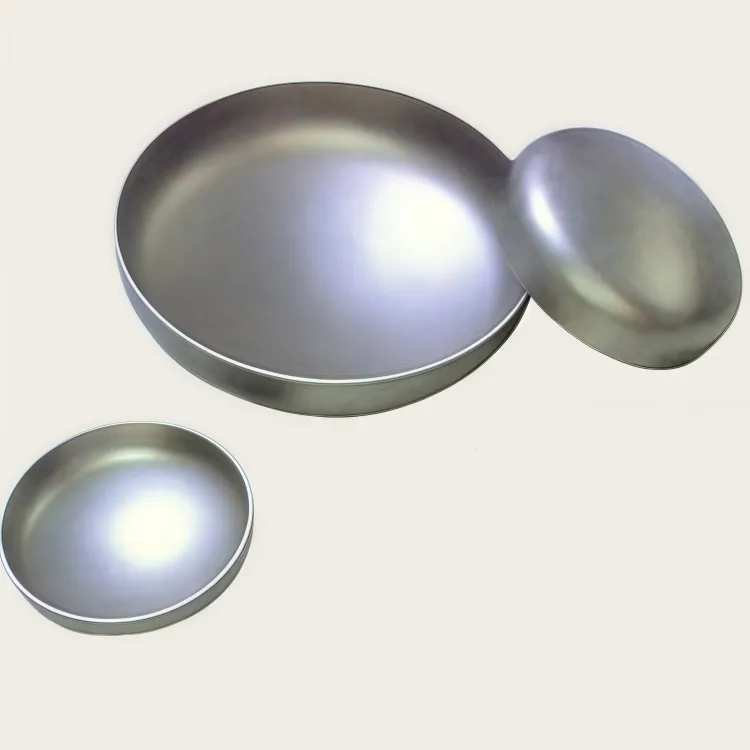
Before delving into the thickness calculation, it is important to understand the different types of ASME dished heads available. The most common types include:
- ASME Torispherical Head: This type of head consists of a spherical section and a toroidal knuckle. It is widely used in pressure vessels due to its relatively simple design and ease of fabrication. ASME Torispherical Head
- ASME Flanged and Dished Head: Also known as a full-hemispherical head, this head has a hemispherical shape with a flanged edge. It offers excellent stress distribution and is suitable for high-pressure applications. ASME Flanged and Dished Head
Each type of dished head has its own unique geometric characteristics and stress distribution patterns, which must be considered when calculating the thickness.
Factors Affecting Dished Head Thickness
Several factors influence the thickness of an ASME dished head, including:

- Internal Pressure: The internal pressure of the pressure vessel is one of the primary factors determining the required thickness of the dished head. Higher pressures generally require thicker heads to withstand the forces exerted by the fluid or gas inside the vessel.
- Diameter of the Vessel: The diameter of the pressure vessel also plays a significant role in determining the thickness of the dished head. Larger diameters typically require thicker heads to maintain structural integrity.
- Material Properties: The material used for the dished head, such as carbon steel, stainless steel, or alloy steel, has a direct impact on its strength and corrosion resistance. Different materials have different allowable stress values, which must be considered when calculating the thickness.
- Corrosion Allowance: To account for potential corrosion over the service life of the pressure vessel, a corrosion allowance is added to the calculated thickness. The corrosion allowance depends on the type of fluid or gas inside the vessel, the operating environment, and the expected service life.
- Design Temperature: The design temperature of the pressure vessel affects the material properties and the allowable stress values. Higher temperatures generally require thicker heads to maintain the required strength.
Thickness Calculation Methods
There are several methods available for calculating the thickness of an ASME dished head, including:
Formulas from ASME BPVC
The ASME BPVC provides specific formulas for calculating the thickness of different types of dished heads based on the factors mentioned above. These formulas take into account the internal pressure, diameter, material properties, and other relevant parameters.
For example, the formula for calculating the thickness of a torispherical head in accordance with Section VIII, Division 1 is:
[t = \frac{PD}{2SE - 0.2P}]
Where:
- (t) is the required thickness of the head
- (P) is the internal design pressure
- (D) is the inside diameter of the vessel
- (S) is the allowable stress of the material
- (E) is the joint efficiency factor
Finite Element Analysis (FEA)
Finite Element Analysis (FEA) is a numerical method used to analyze the stress distribution and deformation of complex structures, such as dished heads. FEA software can simulate the behavior of the dished head under different loading conditions and provide detailed information about the stress and strain distribution.
FEA is particularly useful for analyzing non-standard or complex dished head designs, where the formulas from the ASME BPVC may not be applicable. It allows engineers to optimize the design and ensure that the dished head meets the required safety and performance criteria.
Software Tools
There are also several software tools available that can assist in the calculation of the thickness of ASME dished heads. These tools typically incorporate the formulas from the ASME BPVC and allow users to input the relevant parameters to obtain the required thickness.
Some software tools also provide additional features, such as stress analysis, fatigue analysis, and optimization of the dished head design. These tools can save time and improve the accuracy of the thickness calculation.
Importance of Accurate Thickness Calculation
Accurately calculating the thickness of an ASME dished head is crucial for several reasons:
- Safety: A properly designed and fabricated dished head ensures the safety of the pressure vessel and its operators. Insufficient thickness can lead to catastrophic failure, resulting in injury, property damage, and environmental pollution.
- Compliance: ASME standards are widely recognized and accepted in the industry. By calculating the thickness in accordance with these standards, pressure vessel manufacturers can ensure that their products meet the required safety and quality requirements.
- Cost-Effectiveness: Over-engineering the dished head by using excessive thickness can increase the cost of the pressure vessel without providing any additional benefits. On the other hand, under-engineering the dished head can lead to premature failure and costly repairs or replacements.
Conclusion
Calculating the thickness of an ASME dished head is a complex process that requires a thorough understanding of the relevant ASME standards, the factors affecting the thickness, and the available calculation methods. As a trusted ASME dished head supplier, we have the expertise and experience to assist our clients in determining the appropriate thickness for their specific applications.
If you are in need of high-quality ASME dished heads or have any questions regarding the thickness calculation, please do not hesitate to contact us. We are committed to providing our clients with the best possible solutions and ensuring the safety and performance of their pressure vessels.
References
- ASME Boiler and Pressure Vessel Code, Section VIII, Division 1
- ASME Boiler and Pressure Vessel Code, Section VIII, Division 2
- Design of Pressure Vessels, by John F. Harvey