

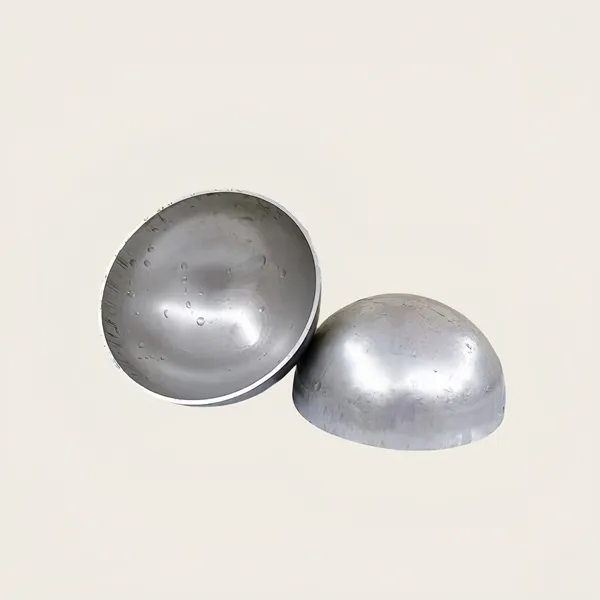
As a supplier of Steel Dish Heads, I've witnessed firsthand the importance of impact resistance in these crucial components. Steel dish heads are widely used in various industries, including petrochemical, food processing, and pharmaceuticals, where they play a vital role in pressure vessels and storage tanks. Ensuring their ability to withstand impact is not only a matter of product quality but also a critical safety consideration. In this blog, I'll share some effective strategies to improve the impact resistance of steel dish heads.

Material Selection
The choice of material is the foundation for enhancing the impact resistance of steel dish heads. High - strength low - alloy (HSLA) steels are often a great option. These steels contain small amounts of alloying elements such as niobium, vanadium, and titanium, which can significantly improve the strength and toughness of the material. For example, ASTM A516 Grade 70 steel is a popular choice for pressure vessel applications. It has good weldability and high impact resistance at low temperatures.
Another option is stainless steel, especially grades like 304 and 316. Stainless steel offers excellent corrosion resistance in addition to good impact properties. The austenitic structure of these stainless steels provides high ductility, which helps the dish heads absorb energy during an impact event. When selecting the material, it's essential to consider the specific service conditions, such as temperature, pressure, and the presence of corrosive substances.
Heat Treatment
Heat treatment is a powerful tool to optimize the microstructure and mechanical properties of steel dish heads. Normalizing is a common heat - treatment process. It involves heating the steel to a specific temperature above the critical range and then air - cooling it. Normalizing refines the grain structure of the steel, which can improve both strength and toughness.
Quenching and tempering is another effective heat - treatment method. Quenching rapidly cools the steel from a high temperature, forming a hard martensitic structure. However, martensite is brittle, so tempering is then carried out to reduce the brittleness and increase the toughness. By carefully controlling the quenching and tempering parameters, such as the quenching medium and tempering temperature, we can achieve the desired balance between strength and impact resistance.
Manufacturing Process
The manufacturing process of steel dish heads also has a significant impact on their impact resistance. Hot forming, as shown in Hot Formed Tank Heads, is a common method. During hot forming, the steel is heated to a high temperature, which makes it more malleable. This process can help relieve internal stresses and improve the overall homogeneity of the material. However, it's crucial to control the forming temperature and speed to avoid excessive grain growth, which can reduce the impact resistance.
Cold forming is another option. It can produce dish heads with high dimensional accuracy. But cold forming can introduce residual stresses in the material, which may reduce the impact resistance. Therefore, stress - relieving heat treatment is often required after cold forming to eliminate these residual stresses.
Design Optimization
The design of steel dish heads can be optimized to enhance their impact resistance. The shape of the dish head is an important factor. Hemispherical dish heads, like those in Pressure Vessel Hemispherical Dished End, distribute stress more evenly compared to other shapes, such as torispherical or ellipsoidal dish heads. This even stress distribution can reduce the likelihood of stress concentration and improve the impact - absorbing capacity.
The thickness of the dish head also plays a crucial role. A thicker dish head generally has higher impact resistance. However, increasing the thickness too much can lead to increased weight and cost. Therefore, a proper balance needs to be found based on the expected impact loads and the service requirements.
Quality Control
Strict quality control is essential to ensure the high impact resistance of steel dish heads. Non - destructive testing methods, such as ultrasonic testing and magnetic particle testing, can be used to detect internal defects, such as cracks or inclusions, which can significantly reduce the impact resistance. These tests should be carried out at various stages of the manufacturing process, from raw material inspection to the final product.
Mechanical testing, including impact testing using the Charpy V - notch test, is also necessary. This test measures the energy absorbed by the material during fracture under impact loading. By setting appropriate acceptance criteria for the impact test results, we can ensure that the dish heads meet the required quality standards.
Surface Treatment
Surface treatment can further improve the impact resistance of steel dish heads. Shot peening is a common surface - treatment method. It involves bombarding the surface of the dish head with small metal shots, which creates a compressive stress layer on the surface. This compressive stress can prevent the initiation and propagation of cracks during an impact event, thereby enhancing the impact resistance.
Coating is another option. Applying a protective coating, such as epoxy or polyurethane, can not only improve the corrosion resistance but also provide some cushioning effect during an impact. The coating can absorb a certain amount of energy and reduce the direct impact on the steel substrate.
Conclusion
Improving the impact resistance of steel dish heads requires a comprehensive approach that includes material selection, heat treatment, manufacturing process optimization, design improvement, quality control, and surface treatment. As a supplier of Steel Dish Heads, we are committed to providing high - quality products that meet the most demanding requirements.
If you are in the market for steel dish heads with excellent impact resistance, we would be more than happy to discuss your specific needs. Our team of experts can provide customized solutions based on your application requirements. Contact us today to start a fruitful business partnership.
References
- ASME Boiler and Pressure Vessel Code
- ASTM Standards for Steel Materials
- "Metallurgy and Mechanics of Welding" by John Norrish