

Yo, what's up everyone! I'm a supplier of Carbon Steel Caps, and today I wanna talk about something super technical but really important - the modulus of rigidity of carbon steel caps.
First off, let's break down what this "modulus of rigidity" thing is. In simple terms, the modulus of rigidity, also known as the shear modulus, measures a material's resistance to shearing forces. When you apply a force that makes one part of the material slide past another part, the modulus of rigidity tells you how much the material will deform under that shear force. It's like testing how bendy or stiff a material is when you try to twist it.
Now, carbon steel caps are widely used in all sorts of industries, from plumbing to construction and even in some high - tech machinery. They're popular because carbon steel is tough, durable, and relatively inexpensive compared to some other materials. But different types of carbon steel can have different moduli of rigidity.
There are basically three main types of carbon steel: low - carbon steel, medium - carbon steel, and high - carbon steel. Low - carbon steel, also known as mild steel, has a relatively low carbon content, usually less than 0.3%. This type of steel is quite ductile, which means it can be easily formed into different shapes. The modulus of rigidity of mild steel end caps is typically around 77 - 80 GPa (gigapascals). You can check out our Mild Steel End Cap products to see how they're made and what they're used for.
Medium - carbon steel has a carbon content between 0.3% and 0.6%. It's stronger than low - carbon steel but a bit less ductile. The modulus of rigidity for medium - carbon steel caps is usually a bit higher, around 80 - 82 GPa. This makes them suitable for applications where you need a bit more strength and resistance to deformation.
High - carbon steel, with a carbon content above 0.6%, is very hard and strong but also quite brittle. The modulus of rigidity of high - carbon steel caps can be in the range of 82 - 84 GPa. However, because of its brittleness, it's not always the best choice for every application.
So, why does the modulus of rigidity matter when it comes to carbon steel caps? Well, if you're using these caps in a situation where they'll be subjected to shear forces, like in a pipe system where there might be some vibration or twisting, you need to know how much the caps can withstand without deforming too much. If the modulus of rigidity is too low, the caps might start to deform under normal operating conditions, which could lead to leaks or other problems. On the other hand, if you choose a cap with a much higher modulus of rigidity than you actually need, you might be overspending on a more expensive material.
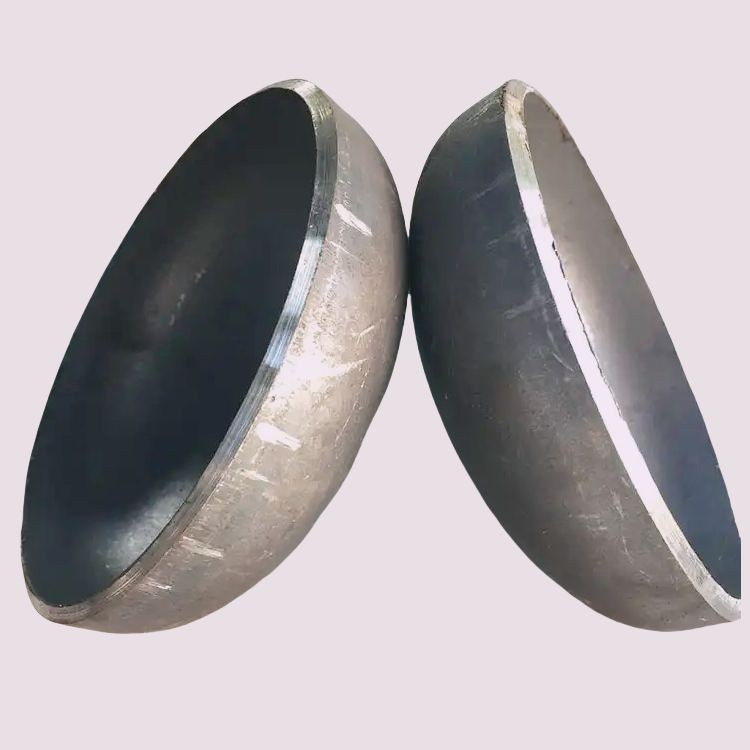

Let's take a real - world example. Say you're working on a plumbing project. You need to cap off some pipes, and these pipes are in an area where there's a bit of movement, maybe due to the building settling or some equipment vibration. You'd want to choose a carbon steel cap with an appropriate modulus of rigidity. If you use a mild steel end cap, which has a relatively lower modulus of rigidity, it might be flexible enough to handle a bit of movement without cracking. But if you're in a high - stress situation, like in an industrial pipeline where there are high - pressure fluids flowing, you might want to go for a medium - or high - carbon steel cap with a higher modulus of rigidity.
Another factor that can affect the modulus of rigidity of carbon steel caps is the manufacturing process. Heat treatment, for example, can change the internal structure of the steel and thus its mechanical properties. When we heat - treat our carbon steel caps, we can fine - tune the modulus of rigidity to meet the specific requirements of our customers. Whether it's annealing, quenching, or tempering, each heat - treatment process can have a different impact on the material's properties.
At our company, we've got a wide range of Carbon Steel Caps to choose from. Our Carbon Steel Buttweld Caps are especially popular because they're easy to install and provide a strong, leak - proof connection. We make sure that each cap we produce meets the highest quality standards, and we can provide detailed information about the modulus of rigidity and other mechanical properties of our products.
If you're in the market for carbon steel caps, it's important to consider the modulus of rigidity along with other factors like cost, corrosion resistance, and ease of installation. We're here to help you make the right choice. Whether you're a small - scale contractor or a large - scale industrial company, we can offer you the best carbon steel caps at competitive prices.
So, if you're interested in our products or have any questions about the modulus of rigidity of carbon steel caps, don't hesitate to get in touch. We're always happy to have a chat and discuss your specific needs. We can provide samples, technical data sheets, and even help you with the installation process if needed.
In conclusion, the modulus of rigidity of carbon steel caps is a crucial property that can affect their performance in different applications. By understanding the different types of carbon steel and how their moduli of rigidity vary, you can make a more informed decision when choosing the right caps for your project. And remember, we're your go - to supplier for high - quality carbon steel caps.
References
- "Materials Science and Engineering: An Introduction" by William D. Callister, Jr. and David G. Rethwisch
- "Mechanical Properties of Materials" by George E. Dieter