

As a seasoned supplier of ASME dished heads, I understand the critical importance of dimensional accuracy in these components. Dished heads are used in a wide range of industries, including oil and gas, chemical processing, and power generation, where they play a crucial role in ensuring the safety and efficiency of pressure vessels. In this blog post, I will share some insights on how to ensure the dimensional accuracy of ASME dished heads, drawing on my years of experience in the industry.
Understanding ASME Standards
The American Society of Mechanical Engineers (ASME) has established a set of standards for dished heads to ensure their quality and safety. These standards, such as ASME Boiler and Pressure Vessel Code (BPVC), specify the design, fabrication, inspection, and testing requirements for dished heads. As a supplier, it is essential to have a thorough understanding of these standards and ensure that all our products comply with them.
The ASME standards define the allowable tolerances for various dimensions of dished heads, including diameter, thickness, height, and radius. These tolerances are based on the intended application of the dished head and the level of precision required. For example, dished heads used in high-pressure applications may have tighter tolerances than those used in low-pressure applications.
Precise Design and Engineering
The first step in ensuring the dimensional accuracy of ASME dished heads is to have a precise design and engineering process. This involves using advanced computer-aided design (CAD) software to create detailed 3D models of the dished heads. The CAD models allow us to simulate the manufacturing process and predict any potential issues that may affect the dimensional accuracy of the final product.
During the design phase, we also consider the material properties of the dished heads. Different materials have different thermal expansion coefficients, which can affect the dimensions of the dished heads during the manufacturing process and in service. By selecting the appropriate material and accounting for its thermal properties in the design, we can minimize the impact of thermal expansion on the dimensional accuracy of the dished heads.
High - Quality Material Selection
The quality of the material used in the manufacturing of ASME dished heads has a significant impact on their dimensional accuracy. We source our materials from reputable suppliers who adhere to strict quality control standards. The materials are carefully inspected upon arrival to ensure that they meet the required chemical composition and mechanical properties.

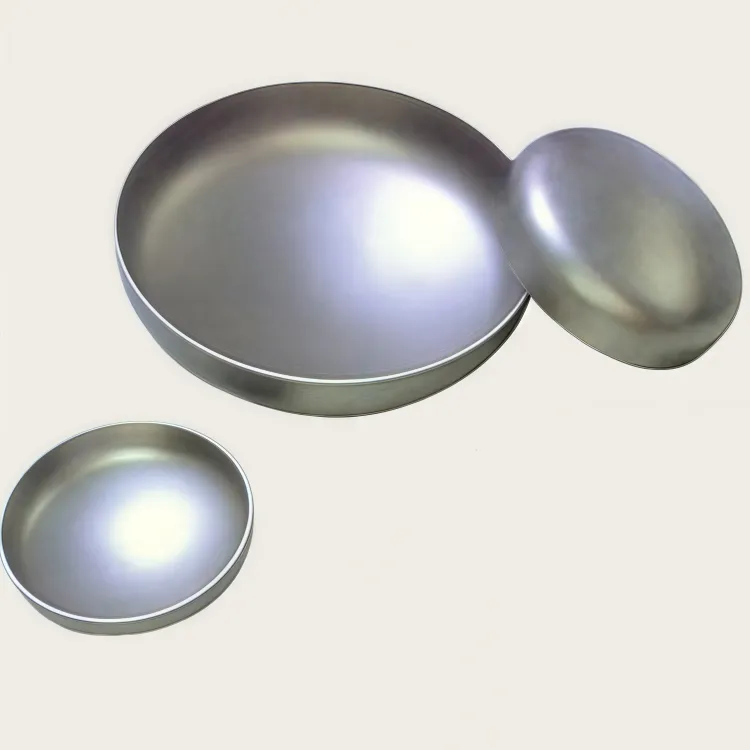
For example, when manufacturing dished heads from stainless steel, we ensure that the steel has the correct amount of chromium, nickel, and other alloying elements to provide the necessary corrosion resistance and strength. Any deviation in the material composition can lead to variations in the mechanical properties of the dished heads, which can affect their dimensional accuracy during the forming and welding processes.
Advanced Manufacturing Processes
We employ advanced manufacturing processes to ensure the dimensional accuracy of ASME dished heads. One of the key processes is the cold forming process, which involves shaping the flat metal plate into a dished shape using a hydraulic press. Cold forming allows us to achieve high precision and repeatability in the manufacturing process.
However, cold forming can also introduce residual stresses in the dished heads, which can cause dimensional changes over time. To relieve these residual stresses, we use a heat treatment process, such as annealing. Annealing involves heating the dished heads to a specific temperature and then cooling them slowly, which helps to reduce the residual stresses and improve the dimensional stability of the dished heads.
In addition to cold forming and heat treatment, we also use precision machining processes to ensure the dimensional accuracy of critical features of the dished heads, such as the flange surface and the weld preparation. Machining processes, such as milling and turning, are used to achieve the required surface finish and dimensional tolerances.
Stringent Quality Control
Quality control is an integral part of ensuring the dimensional accuracy of ASME dished heads. We have a comprehensive quality control system in place that includes in - process inspections and final inspections. During the manufacturing process, our quality control team conducts regular inspections to check the dimensions of the dished heads at various stages.
We use a variety of measuring instruments, such as calipers, micrometers, and coordinate measuring machines (CMMs), to measure the dimensions of the dished heads. CMMs are particularly useful for measuring complex geometries and ensuring high precision. Any deviations from the specified dimensions are immediately identified, and corrective actions are taken to bring the dished heads back within the acceptable tolerances.
At the final inspection stage, we perform a detailed inspection of the dished heads to ensure that they meet all the ASME standards and customer requirements. This includes visual inspection, dimensional inspection, and non - destructive testing, such as ultrasonic testing and radiographic testing, to detect any internal defects that may affect the dimensional accuracy or the structural integrity of the dished heads.
Types of ASME Dished Heads and Their Specific Requirements
There are several types of ASME dished heads, each with its own specific requirements for dimensional accuracy. For example, ASME Flanged and Dished Head has a flanged edge, which requires precise machining to ensure a proper fit with the pressure vessel. The flange dimensions, such as the outer diameter, inner diameter, and thickness, must be within the specified tolerances to ensure a leak - tight connection.
Hemispherical Head ASME Code has a spherical shape, which requires high precision in the forming process to ensure that the radius of curvature is consistent throughout the head. Any deviation in the radius can affect the stress distribution in the head and reduce its structural integrity.
ASME Torispherical Head has a toroidal section and a spherical section, which require careful control of the forming process to ensure the correct dimensions of both sections. The transition between the toroidal and spherical sections must also be smooth to avoid stress concentrations.
Continuous Improvement
We are committed to continuous improvement in our manufacturing processes and quality control systems. We regularly review our production data and customer feedback to identify areas for improvement. By analyzing the data, we can identify trends in dimensional variations and take proactive measures to address them.
We also invest in research and development to explore new materials and manufacturing technologies that can further improve the dimensional accuracy of ASME dished heads. For example, we are exploring the use of composite materials, which may offer better dimensional stability and corrosion resistance than traditional metal materials.
Conclusion
Ensuring the dimensional accuracy of ASME dished heads is a complex but essential task. By understanding the ASME standards, having a precise design and engineering process, selecting high - quality materials, using advanced manufacturing processes, implementing stringent quality control, and continuously improving our operations, we can produce dished heads that meet the highest standards of dimensional accuracy.
If you are in the market for high - quality ASME dished heads, we invite you to contact us for procurement and further discussions. Our team of experts is ready to assist you in selecting the right dished heads for your specific application and ensuring that they meet your dimensional accuracy requirements.
References
- ASME Boiler and Pressure Vessel Code (BPVC), American Society of Mechanical Engineers.
- Various industry research papers on pressure vessel design and manufacturing.