

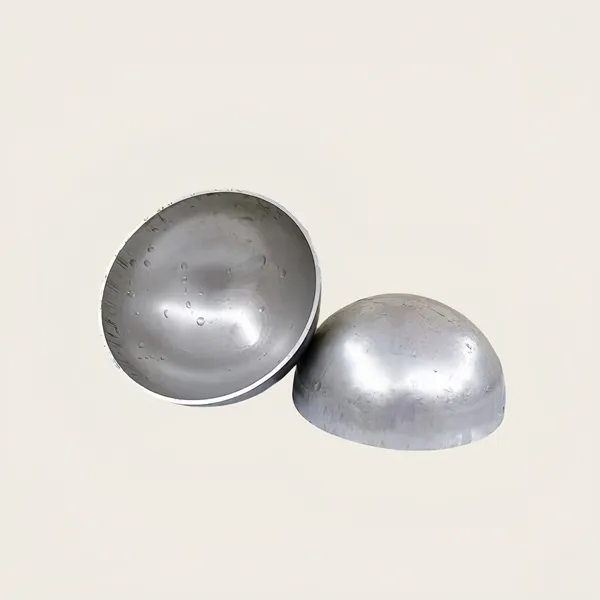
As a prominent supplier of Hot Formed Tank Heads, I've witnessed the diverse applications and performance of these crucial components in various industries. One fascinating aspect that often captures the attention of our clients is the color - change characteristics of hot formed tank heads during their service life. In this blog, I'll delve into the underlying reasons, the stages of color change, and what these changes might signify.
Underlying Reasons for Color Change
Oxidation
Oxidation is one of the primary causes of color change in hot formed tank heads. When the metal surface is exposed to oxygen in the air, especially in high - temperature and high - humidity environments, a chemical reaction occurs. The iron in the steel alloy of the tank heads reacts with oxygen to form iron oxides. For example, when iron reacts with oxygen in the presence of moisture, it forms hydrated iron (III) oxide, commonly known as rust. This process starts with a thin layer of oxidation on the surface, which can gradually change the appearance of the tank head from its original metallic luster to a duller, more discolored state.
Thermal Effects
During the hot - forming process, the tank heads are heated to high temperatures. This initial heat treatment can leave an imprint on the metal's surface properties. Moreover, during the use of the tank heads, if they are subjected to repeated heating and cooling cycles, thermal stresses are induced. These thermal stresses can cause changes in the crystal structure of the metal. As a result, the way the metal reflects light changes, leading to visible color variations. For instance, some areas may become darker due to the formation of micro - scale defects or changes in the grain size of the metal under thermal influence.
Chemical Reactions with Contents
The substances stored in the tanks can also play a significant role in the color change of the tank heads. If the tank is used to store corrosive chemicals, acids, or alkalis, these substances can react with the metal surface of the tank heads. For example, if a tank stores sulfuric acid, the acid can react with the steel, causing pitting corrosion and a significant change in color. The reaction may produce metal salts that deposit on the surface, giving the tank head a different color, such as a brown or blackish tint depending on the specific metal salts formed.
Stages of Color Change
Initial Stage: Slight Discoloration
In the early days of use, hot formed tank heads may start to show a slight discoloration. This is often a result of the initial exposure to the environment. The surface may lose its bright metallic shine and develop a faint yellowish or grayish tint. This is usually due to a thin layer of oxidation forming on the surface. The oxidation process is relatively slow at this stage, and it may not significantly affect the performance of the tank head. However, it is an early warning sign that the tank head is starting to interact with its surroundings.
Intermediate Stage: Visible Color Variations
As time passes, the color change becomes more pronounced. The tank head may develop patches of different colors. For example, some areas may turn brown, while others may remain a lighter gray. This is often a sign that the oxidation or chemical reaction is progressing at different rates across the surface. Factors such as local variations in the environment, the presence of impurities on the surface, or differences in the thickness of the metal can contribute to these uneven color changes. At this stage, it is important to monitor the tank head closely, as the color changes may be accompanied by some degree of surface degradation.
Advanced Stage: Severe Discoloration and Surface Damage
In the advanced stage, the tank head may exhibit severe discoloration, such as a deep red - brown or black color. This is usually an indication of extensive corrosion or a significant chemical reaction. The surface may also show signs of pitting, cracking, or flaking. At this point, the structural integrity of the tank head may be compromised, and it may need to be replaced or repaired. Severe discoloration can also affect the performance of the tank, as it may lead to leaks or a reduction in the tank's ability to withstand pressure.
What Color Changes Signify
Normal Wear and Tear
Some degree of color change is normal and can be considered as part of the wear and tear process. A slight discoloration over time may not necessarily indicate a problem with the tank head. It can simply be a result of the metal's natural interaction with the environment. As long as the color change is minor and there are no signs of surface damage or structural problems, the tank head can continue to function normally.
Potential Corrosion
However, significant or rapid color changes can be a sign of potential corrosion. If the tank head develops a rusty or brownish color, especially in a short period, it may indicate that the metal is corroding at an accelerated rate. Corrosion can weaken the tank head and reduce its lifespan, and it may also contaminate the substances stored in the tank. In such cases, it is crucial to take immediate action, such as inspecting the tank, treating the corrosion, or replacing the tank head if necessary.

Incompatible Contents
A sudden and unusual color change can also suggest that the substances stored in the tank are incompatible with the material of the tank head. For example, if a tank is designed to store a certain type of chemical, but a different, more corrosive chemical is accidentally introduced, it can cause a rapid and significant color change. This is a serious issue that needs to be addressed promptly to prevent further damage to the tank and ensure the safety of the operation.
Torispherical Dished Head and Color Change
Torispherical dished heads are a common type of hot formed tank head. They have a unique shape that combines a spherical section with a toroidal section. The color - change characteristics of torispherical dished heads are similar to those of other hot formed tank heads, but there are some specific considerations. Due to their shape, the stress distribution on the surface of torispherical dished heads is not uniform. This can lead to differences in the color - change patterns. For example, areas of higher stress may experience more rapid oxidation or corrosion, resulting in more pronounced color changes. Additionally, the curvature of the dished head can affect the way it is exposed to the environment and the substances stored in the tank, which can also influence the color - change process.
Pressure Vessel Hemispherical Dished End and Color Change
Pressure vessel hemispherical dished ends are designed to withstand high pressures. The color - change characteristics of these dished ends are also important to monitor. In a high - pressure environment, any color change can be a sign of potential problems. For example, a color change may indicate that the metal is experiencing stress corrosion cracking. This is a serious issue as it can compromise the integrity of the pressure vessel and lead to catastrophic failures. Therefore, it is essential to regularly inspect the color of pressure vessel hemispherical dished ends and take appropriate measures if any abnormal color changes are detected.
Conclusion
The color - change characteristics of hot formed tank heads during use are a complex phenomenon influenced by oxidation, thermal effects, and chemical reactions with the contents of the tank. Understanding these characteristics can help in the early detection of potential problems, such as corrosion and material degradation. As a supplier of Hot Formed Tank Heads, we are committed to providing high - quality products and sharing our knowledge with our clients. If you are interested in purchasing hot formed tank heads or have any questions about their color - change characteristics, we encourage you to contact us for further discussion and procurement negotiation.
References
- ASM Handbook Committee. (1996). ASM Handbook Volume 13A: Corrosion: Fundamentals, Testing, and Protection. ASM International.
- Shreir, L. L., Jarman, R. A., & Burstein, G. T. (2000). Corrosion. Butterworth - Heinemann.
- ASME Boiler and Pressure Vessel Code. (Current Edition). ASME.