

Hey there! As a supplier of ASME tank heads, I've had my fair share of experiences dealing with all sorts of projects, especially those in high - altitude areas. High - altitude locations bring a unique set of challenges that we need to take into account when designing ASME tank heads. Let's dive into what these design considerations are.
Atmospheric Pressure Variations
One of the most significant factors in high - altitude areas is the lower atmospheric pressure. At sea level, the standard atmospheric pressure is about 14.7 psi (pounds per square inch). But as you go up in altitude, this pressure drops. For example, at an altitude of 5000 feet, the atmospheric pressure can be around 12.2 psi.
This lower pressure means that the tank head has to withstand a different pressure differential compared to a tank at sea level. When we design ASME tank heads, we need to factor in this reduced external pressure. If we don't, there's a risk of the tank head collapsing due to the internal pressure being too high relative to the external pressure.
We use specialized engineering calculations to determine the appropriate thickness and material for the tank head. For instance, we might increase the thickness of the head to provide more structural integrity. In some cases, we may also choose a stronger material that can handle the pressure differential better.
Temperature Fluctuations
High - altitude areas often experience more extreme temperature fluctuations. During the day, the sun can heat up the tank heads significantly, while at night, the temperatures can drop to near - freezing levels. These rapid temperature changes can cause thermal expansion and contraction of the tank head material.
If the tank head isn't designed to handle these temperature variations, it can lead to cracks and leaks over time. We need to select materials with good thermal properties. Stainless steel is a popular choice as it has a relatively low coefficient of thermal expansion. This means that it won't expand or contract as much as some other materials when the temperature changes.
We also need to consider the design of the joints and connections in the tank head. These areas are particularly vulnerable to the effects of temperature fluctuations. By using proper welding techniques and sealants, we can ensure that the tank head remains leak - free even under extreme temperature conditions.
Wind and Seismic Activity
High - altitude regions are often more exposed to strong winds and seismic activity. Strong winds can exert a significant amount of force on the tank heads, especially if they are large in size. Seismic events can also cause vibrations and movements that the tank heads need to withstand.
When designing ASME tank heads for these areas, we incorporate wind and seismic load calculations. We might add additional reinforcement to the tank head, such as stiffeners or braces, to increase its resistance to wind and seismic forces. For example, for a large - scale tank head in a windy high - altitude location, we could install multiple stiffeners around the perimeter to prevent it from being deformed by the wind.
Altitude - Specific Codes and Standards
In addition to the ASME standards, there may be local or altitude - specific codes and regulations that we need to follow. These codes are in place to ensure the safety and reliability of the tank heads in high - altitude environments.
We stay up - to - date with these codes and make sure that our designs comply with all the requirements. This may involve additional testing and inspections. For example, we might conduct pressure tests at simulated high - altitude conditions to verify that the tank head meets the safety standards.
Types of ASME Tank Heads for High - Altitude Areas
There are several types of ASME tank heads that we offer, each with its own advantages for high - altitude applications.
ASME Torispherical Head
The ASME Torispherical Head is a popular choice. It has a dished shape with a knuckle radius, which provides good structural strength. This shape helps to distribute the pressure evenly across the head, making it more resistant to the pressure differentials and forces encountered in high - altitude areas.
ASME Flanged and Dished Head
The ASME Flanged and Dished Head is another option. It has a flanged edge that allows for easy installation and connection to the tank body. The dished shape also provides good pressure - handling capabilities. This type of head is often used in applications where quick installation and maintenance are required.
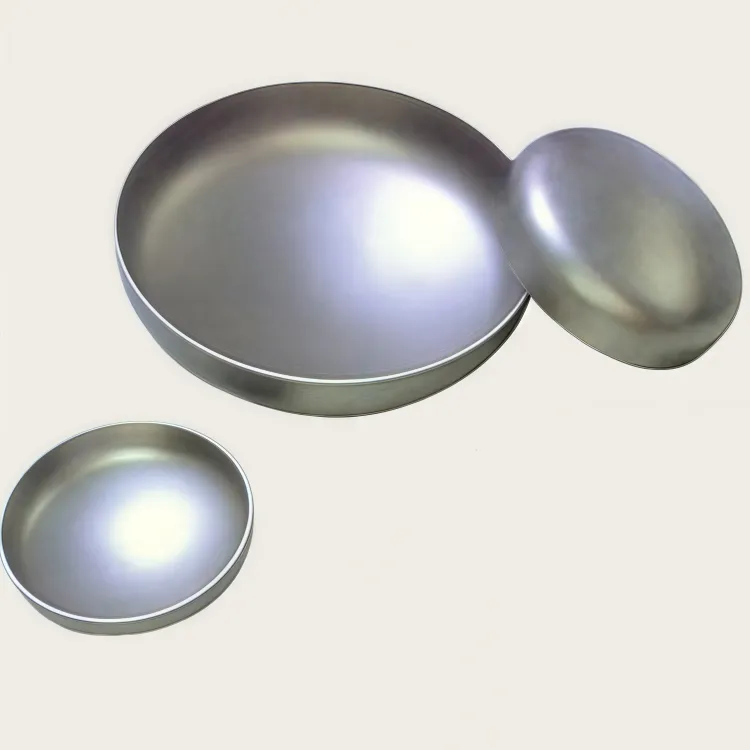
Hemispherical Head ASME Code
The Hemispherical Head ASME Code offers the best strength - to - weight ratio among the different types of tank heads. Its spherical shape distributes the pressure uniformly, making it ideal for high - pressure applications. In high - altitude areas, where the pressure differentials can be significant, a hemispherical head can provide excellent performance.

Importance of Quality Assurance
When it comes to supplying ASME tank heads for high - altitude areas, quality assurance is crucial. We have a strict quality control process in place to ensure that every tank head meets the highest standards.
We start with the selection of raw materials. We source our materials from reputable suppliers and conduct thorough inspections to ensure their quality. During the manufacturing process, we use advanced manufacturing techniques and equipment to ensure precision and consistency.
After the tank head is manufactured, we conduct a series of tests, including pressure tests, non - destructive testing, and visual inspections. These tests help us to identify any potential defects or weaknesses in the tank head before it's shipped to the customer.
Conclusion
Designing ASME tank heads for high - altitude areas is a complex process that requires careful consideration of many factors. From atmospheric pressure variations and temperature fluctuations to wind and seismic activity, each aspect plays a crucial role in the design and performance of the tank head.
If you're in need of ASME tank heads for a high - altitude project, don't hesitate to reach out. We have the expertise and experience to design and supply tank heads that meet your specific requirements. Whether you need a ASME Torispherical Head, ASME Flanged and Dished Head, or Hemispherical Head ASME Code, we've got you covered. Let's work together to ensure your project is a success.
References
- ASME Boiler and Pressure Vessel Code
- Engineering handbooks on pressure vessel design
- Research papers on the effects of high - altitude conditions on industrial equipment