

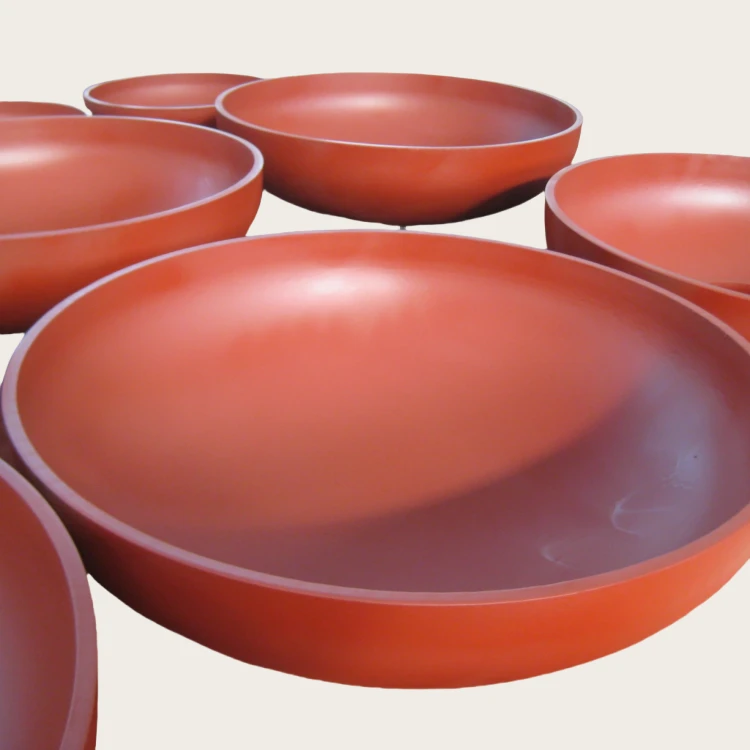
Hey there! I'm a supplier of ASME Standard Tankheads, and today I wanna share some insights on how to test the integrity of these tankheads.
Why Testing Integrity Matters
First off, why is it so important to test the integrity of ASME Standard Tankhead? Well, these tankheads are used in a wide range of industries, like chemical processing, food and beverage, and oil and gas. Any failure in the tankhead can lead to leaks, which can be not only costly but also dangerous. For example, in the chemical industry, a leak from a tank could release harmful substances into the environment, posing a threat to human health and the ecosystem. So, making sure the tankheads are in top - notch condition is crucial.
Visual Inspection
One of the simplest yet most effective ways to start testing is through visual inspection. This is like the first line of defense. You just take a good look at the tankhead. Check for any obvious signs of damage, such as cracks, dents, or corrosion. Cracks can be a big red flag as they can propagate over time and eventually lead to a complete failure of the tankhead. Dents might not seem like a huge deal at first, but they can cause stress concentrations, which can also lead to problems down the road. And corrosion? That's a silent killer. It eats away at the material, weakening the tankhead gradually.
When doing a visual inspection, it's a good idea to use some basic tools. A flashlight can help you see into the darker areas of the tankhead. And a magnifying glass can be handy to spot small cracks or pits that might be hard to see with the naked eye.
Dye Penetrant Testing
If you suspect there might be some surface - breaking defects that you can't see during the visual inspection, dye penetrant testing is a great option. Here's how it works. First, you clean the surface of the tankhead really well. You don't want any dirt or grease getting in the way. Then, you apply a special dye to the surface. This dye is designed to seep into any cracks or defects. You let it sit for a while, usually around 10 - 30 minutes, depending on the type of dye.

After that, you wipe off the excess dye. Then, you apply a developer. The developer helps to draw the dye out of the defects, making them visible. If there are any surface - breaking cracks or defects, they'll show up as bright, colored lines on the surface of the tankhead. This method is pretty sensitive and can detect even very small defects.
Ultrasonic Testing
Ultrasonic testing is another powerful technique for testing the integrity of ASME Standard Tankheads. It uses high - frequency sound waves to detect internal defects. You use an ultrasonic transducer, which sends out sound waves into the tankhead. These sound waves travel through the material and bounce back when they hit a defect or an interface.
The transducer then picks up these reflected waves, and a machine analyzes them. By looking at the time it takes for the waves to bounce back and the amplitude of the reflected waves, you can figure out the size, location, and type of the defect. Ultrasonic testing is great because it can detect internal defects that you can't see from the outside, like voids or delaminations.
However, it does require some skill and experience to interpret the results correctly. You need to know what normal reflections look like and be able to distinguish them from reflections caused by defects.
Radiographic Testing
Radiographic testing is similar to taking an X - ray of the tankhead. You use either X - rays or gamma rays to penetrate the material. A film or a digital detector is placed on the other side of the tankhead. When the rays pass through the tankhead, they create an image on the film or detector.
If there are any internal defects, such as cracks or inclusions, they'll show up as darker or lighter areas on the image, depending on the type of defect. Radiographic testing is very accurate and can provide detailed information about the internal structure of the tankhead. But it also has some drawbacks. It's expensive, and it requires special safety precautions because of the radiation involved.
Pressure Testing
Pressure testing is a must - do when it comes to testing the integrity of ASME Standard Tankheads. There are two main types of pressure tests: hydrostatic testing and pneumatic testing.
In hydrostatic testing, you fill the tankhead with water and then apply pressure. The pressure is usually higher than the normal operating pressure of the tank. You keep the pressure steady for a certain period of time, typically around 30 minutes to an hour. During this time, you carefully check for any leaks. If there are any leaks, they'll be pretty obvious as water will start to seep out.
Pneumatic testing, on the other hand, uses air or another gas instead of water. It's a bit more dangerous than hydrostatic testing because if there's a sudden failure, the gas can cause a more violent explosion. So, it's usually only used when hydrostatic testing is not feasible.
Testing Flanged and Dished Polished Heads
When it comes to Flanged and Dished Polished Heads, the testing process is similar, but there are some additional things to consider. The flange area needs to be inspected carefully for any signs of damage or misalignment. A misaligned flange can cause problems when the tankhead is installed, leading to leaks or uneven stress distribution.
The polished surface also needs to be checked for any scratches or marks. These can not only affect the appearance but also potentially weaken the material. You can use the same testing methods as for regular tankheads, but you might need to be a bit more careful to avoid damaging the polished surface.
Testing ASME Standard Dished Head for Storage Tank
ASME Standard Dished Head for Storage Tank has its own unique testing requirements. Storage tanks often operate under different conditions than other types of tanks. They might be exposed to different temperatures, pressures, and chemicals.
So, in addition to the standard testing methods, you might need to test the tankhead for its resistance to the specific chemicals it'll be storing. You can do this by conducting chemical compatibility tests. You expose a small sample of the tankhead material to the chemical and monitor for any signs of degradation over time.
Conclusion
Testing the integrity of ASME Standard Tankheads is a multi - step process that requires a combination of different testing methods. Visual inspection, dye penetrant testing, ultrasonic testing, radiographic testing, and pressure testing all play important roles in ensuring that the tankheads are safe and reliable.
If you're in the market for high - quality ASME Standard Tankheads or need more information about testing their integrity, don't hesitate to reach out. We're here to help you make the right choice and ensure that your tanks are in the best possible condition. Whether you need Flanged and Dished Polished Heads or ASME Standard Dished Head for Storage Tank, we've got you covered.
References
- ASME Boiler and Pressure Vessel Code
- ASTM Standards for Non - Destructive Testing
- Industry best practices for tankhead testing and inspection