

Hey there! I'm a supplier of ASME Standard Tankheads, and today I wanna chat about the surface finish requirements for these tankheads. It's super important stuff, especially if you're in the market for high - quality tankheads that meet ASME standards.
First off, let's understand what ASME Standard Tankheads are. ASME stands for the American Society of Mechanical Engineers, and their standards are widely recognized and followed in the industry. You can check out more details about ASME Standard Tankhead. These tankheads are used in various applications, such as pressure vessels, storage tanks, and more.
Now, when it comes to surface finish requirements, there are several aspects to consider. The surface finish can impact the performance, durability, and even the aesthetics of the tankhead.
Visual Inspection
One of the most basic requirements is a visual inspection. The surface of the tankhead should be free from any visible defects like cracks, scratches, dents, or porosity. Cracks can be a serious issue as they can compromise the structural integrity of the tankhead, leading to potential leaks or failures under pressure. Scratches, although they might seem minor, can also act as stress concentrators and accelerate corrosion over time.
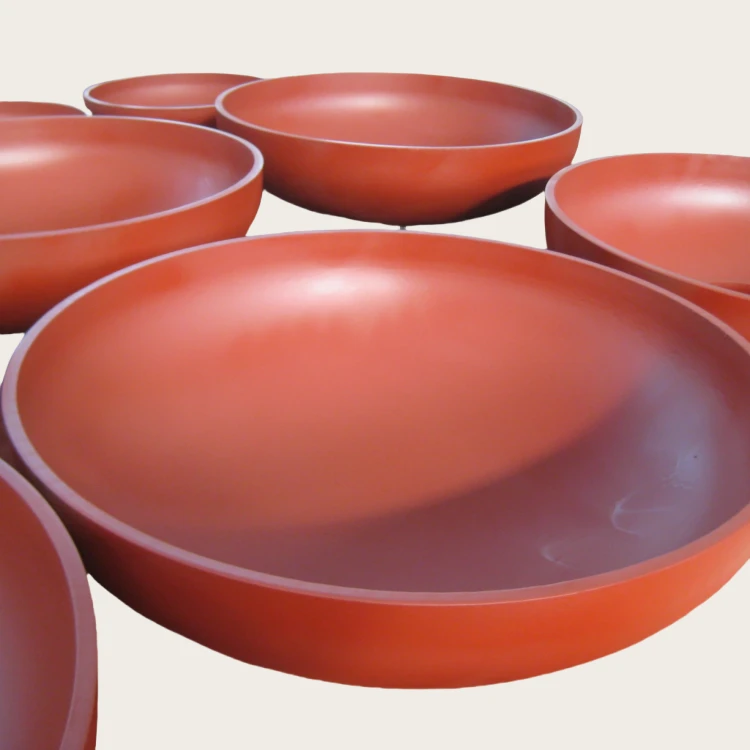

For example, if you're using a tankhead in a chemical storage application, even a small scratch can allow the corrosive chemicals to penetrate the surface and start eating away at the material. So, during the manufacturing process, we pay close attention to ensure that the surface is smooth and defect - free.
Roughness
Surface roughness is another crucial factor. The ASME standards specify certain roughness values that the tankhead surface should meet. A rough surface can cause problems in applications where a smooth flow of fluids is required. For instance, in a heat exchanger tankhead, a rough surface can disrupt the flow of the heat - transfer fluid, reducing the efficiency of the heat exchange process.
We use specialized equipment to measure the surface roughness. The values are usually expressed in micro - inches or micrometers. Depending on the specific application and the type of ASME Standard Tankhead, the roughness requirements can vary. For example, 2 1 Ellipsoidal Head used in a high - precision application might have a more stringent roughness requirement compared to a tankhead used in a less critical storage application.
Weld Areas
If the tankhead has welds, the surface finish of the weld areas is also important. The welds should be smooth and free from any undercutting, overlaps, or lack of fusion. Undercutting can weaken the weld joint, while overlaps can create areas where debris can accumulate, leading to corrosion.
We take extra care during the welding process to ensure that the welds are of high quality. After welding, we perform post - weld treatments like grinding and polishing to achieve the required surface finish in the weld areas. For Torispherical Head ASME, which often has welds at the junction of the spherical and cylindrical parts, the surface finish of the welds is crucial for the overall performance of the tankhead.
Coating and Painting
In some cases, the tankhead might require a coating or painting to protect it from corrosion. The surface finish before applying the coating is essential. The surface should be clean and properly prepared to ensure good adhesion of the coating. Any oil, grease, or dirt on the surface can prevent the coating from bonding properly, leading to premature coating failure.
We follow strict cleaning and preparation procedures before applying the coating. This might include degreasing, sandblasting, or chemical cleaning, depending on the material of the tankhead and the type of coating being used.
Material Finish
The type of material used for the tankhead also affects the surface finish requirements. Different materials have different properties and corrosion resistances. For example, stainless steel tankheads are known for their corrosion resistance, but they still need to have a proper surface finish to maintain their aesthetic appeal and performance.
Aluminum tankheads, on the other hand, are lightweight but might require a different surface treatment to prevent oxidation. We work closely with our customers to understand their specific requirements and choose the right material and surface finish combination for their application.
Impact on Performance
The surface finish of the ASME Standard Tankhead can have a significant impact on its performance. A smooth surface finish can reduce friction, which is beneficial in applications where fluids are flowing through the tankhead. It can also improve the heat - transfer efficiency in heat exchanger applications.
Moreover, a proper surface finish can enhance the corrosion resistance of the tankhead. By preventing the accumulation of debris and moisture on the surface, we can reduce the risk of corrosion and extend the service life of the tankhead.
Meeting the Standards
As a supplier of ASME Standard Tankheads, we have a strict quality control system in place to ensure that all our tankheads meet the ASME surface finish requirements. We use advanced manufacturing techniques and equipment to produce tankheads with the highest quality surface finish.
Our team of experienced engineers and technicians is well - versed in the ASME standards and continuously monitor the manufacturing process to make sure that every tankhead that leaves our facility meets or exceeds the requirements.
Why Choose Us?
We understand that choosing the right supplier for your ASME Standard Tankheads is crucial. We offer a wide range of tankheads, including 2 1 Ellipsoidal Head and Torispherical Head ASME, with excellent surface finishes. Our prices are competitive, and we provide top - notch customer service.
If you're in the market for ASME Standard Tankheads and have any questions about the surface finish requirements or our products, don't hesitate to reach out. We're here to help you find the perfect tankhead for your application. Whether you're a small business or a large industrial enterprise, we can work with you to meet your needs.
So, if you're looking for high - quality ASME Standard Tankheads with the right surface finish, get in touch with us for a detailed discussion and to start the procurement process.
References
- American Society of Mechanical Engineers (ASME) Boiler and Pressure Vessel Code
- Industry standards and guidelines for tankhead manufacturing and surface finish requirements