

Introduction
Industrial storage tanks are containers widely used in the fluid industry, mainly used to store raw materials, finished products and intermediate products.
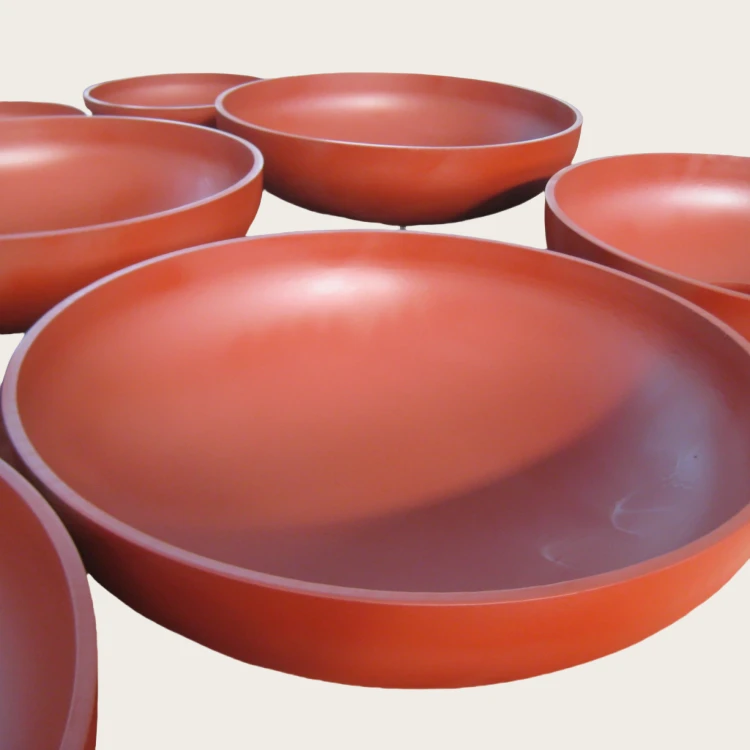
Industrial storage tanks play an irreplaceable role in ensuring safe production of equipment, energy conservation and emission reduction, and improving the overall management level, and are indispensable in national strategic reserves. As a container widely used in the fluid industry, storage tanks are mostly used to store raw materials, finished products and intermediate products. Complex and diverse working conditions place high demands on storage containers. For safety reasons, industrial storage tanks are mostly steel tanks. According to the different requirements of storage medium characteristics and storage temperature, pressure and other parameters, the materials of storage tanks are mostly carbon steel, low-temperature steel, stainless steel and other materials. Other materials such as fiberglass and plastic are not considered because they do not meet the requirements of fire prevention and pressure resistance. According to the structure of the tank body, storage tanks can generally be divided into: horizontal tanks, spherical tanks, dome tanks, external floating roof tanks and internal floating roof tanks. ASME tank heads need to be purchased, manufactured and inspected according to order requirements and ASME standards.

Parameter
|
Type |
Elliptical Head |
|
Manufacture Standard |
As per ASME Ⅷ-1,2023 UG79, &UG81 |
|
Inner Diameter |
3125mm |
|
Min Thk. A/F |
37mm |
|
Straight Flange |
50mm |
|
Cutting Method |
Gas Cutting |
|
Forming Method |
Cold Forming |
|
Heat Treatment |
Required |
|
Material Designation |
SA 516 Gr.70N |
|
Material Standard |
As per ASME II-A,2023 |
|
Surface Treatment |
Sand Blasting |
|
NDT Method & Acceptance Creteria |
100%UT |
Features
High safety:
The upper head tank is strictly designed and tested to ensure that it can withstand high pressure or low temperature.
Strong stability:
The upper head tank is made of solid structure and materials, which can withstand the changes and pressure of the external environment.
Easy maintenance:
The maintenance and cleaning of the upper head tank are relatively simple, and regular inspection and maintenance can be carried out.
High space utilization:
The upper head tank is usually designed vertically, which can better utilize space and reduce floor space.

Processing Methods
Integral forming and petal forming for ASME standard tankhead have been performed by Dalian Dingjin as belowing: Integral forming mainly includes stamping and spinning according to the processing method. Integral forming can be divided into cold processing and hot processing according to the processing temperature (of which the so-called warm processing is actually a kind of cold processing). The combination of processing method and temperature has hot spinning, hot stamping, cold spinning, cold stamping and drum forming. Hot spinning is the combination of hot processing and spinning.
For standard series of tank heads, stamping is generally used, but for non-standard series of heads or heads with large diameters, spinning is generally used. Compared with stamping, spinning has the advantages of saving mold costs and the size can be adjusted according to requirements.
Generally, cold spinning is used for spinning tank heads, but when the thickness of the head is thick or the material strength is very high, it is difficult to use cold spinning. For heads at the edge of the capacity limit of the cold spinning equipment, if cold spinning is used, problems such as material stratification and surface micro-cracks will occur; cold spinning beyond the capacity range cannot be processed. At this time, hot spinning can be used.
Hot spinning uses flame spray heating. Because it is necessary to reserve processing and heating positions, the insulation equipment cannot be completely closed, and the effect is far less than heating in the furnace. Therefore, the temperature is uneven, which will inevitably cause inconsistent structures. The metallographic and mechanical properties of the surface R part, transition r part, and straight edge of the tank head are analyzed.
Although the results are all qualified, there are large differences in different parts. At the same time, the results of processing heads of different materials are also different.
After the tank head is processed and formed, it must be inspected in accordance with the ASME standard and can only be used after it meets the standard.


