

Piezoelectric properties refer to the ability of certain materials to generate an electric charge in response to applied mechanical stress, and conversely, to undergo a mechanical deformation when an electric field is applied. As a leading supplier of ASME elliptical heads, I often get inquiries about whether these heads possess piezoelectric properties. In this blog, I will delve into this topic and provide a comprehensive understanding of the piezoelectric characteristics, or lack thereof, in ASME elliptical heads.
Understanding ASME Elliptical Heads
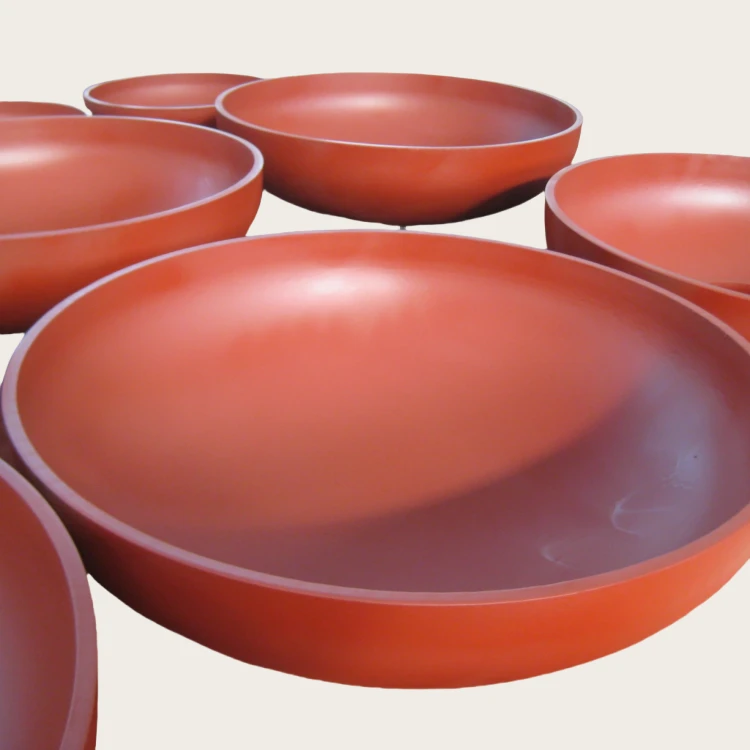
ASME elliptical heads are crucial components in various industrial applications, especially in pressure vessels. They are designed and manufactured according to the standards set by the American Society of Mechanical Engineers (ASME). These heads are typically used to close the ends of cylindrical or spherical pressure vessels, providing structural integrity and ensuring the safety of the overall system.
The elliptical shape of these heads offers several advantages. It distributes stress more evenly compared to other shapes, such as flat heads, which helps in withstanding high internal pressures. The design also allows for efficient use of materials, reducing the overall weight and cost of the pressure vessel.
ASME elliptical heads are made from a variety of materials, including carbon steel, stainless steel, and alloy steel. The choice of material depends on factors such as the operating temperature, pressure, and the nature of the fluid or gas contained within the vessel.
Piezoelectricity: A Brief Overview
Piezoelectricity was discovered in 1880 by Jacques and Pierre Curie. They found that certain crystals, such as quartz and Rochelle salt, generate an electric charge when subjected to mechanical stress. This phenomenon is known as the direct piezoelectric effect. Conversely, when an electric field is applied to these materials, they undergo a mechanical deformation, which is called the converse piezoelectric effect.
The piezoelectric effect occurs due to the asymmetrical crystal structure of certain materials. When a mechanical stress is applied, the positive and negative charges within the crystal lattice are displaced, creating an electric dipole moment and thus generating an electric charge.
Piezoelectric materials have a wide range of applications, including sensors, actuators, ultrasonic transducers, and energy harvesting devices. They are valued for their high sensitivity, fast response time, and ability to convert between mechanical and electrical energy.

Piezoelectric Properties of ASME Elliptical Heads
In general, ASME elliptical heads do not possess significant piezoelectric properties. The materials commonly used to manufacture these heads, such as carbon steel, stainless steel, and alloy steel, are not piezoelectric. These metals have a symmetrical crystal structure, which means that when a mechanical stress is applied, the charges within the lattice do not create an electric dipole moment, and no electric charge is generated.
However, it is important to note that there could be exceptions. If a non - standard material with piezoelectric properties is used in the manufacturing of an ASME elliptical head, then it may exhibit piezoelectric behavior. But this is extremely rare in industrial applications, as the choice of material for ASME elliptical heads is primarily based on mechanical strength, corrosion resistance, and cost - effectiveness, rather than piezoelectric properties.
Importance of Non - Piezoelectricity in ASME Elliptical Heads
The non - piezoelectric nature of ASME elliptical heads is actually beneficial in most industrial applications. In pressure vessels, the primary concern is the mechanical integrity and safety of the system. The absence of piezoelectricity means that there is no risk of electrical interference or unwanted electrical charges being generated due to normal mechanical stresses within the head.
For example, in chemical processing plants where pressure vessels are used to store and process various chemicals, any electrical interference could potentially cause problems with the monitoring and control systems. The non - piezoelectric materials used in ASME elliptical heads ensure the reliable operation of these systems.
Related Products and Applications
As an ASME elliptical head supplier, we also offer related products such as Torispherical Head ASME, ASME Standard Tankhead, and Flanged and Dished Polished Heads. These products are also designed and manufactured to meet the strict ASME standards and are widely used in different industries.
Torispherical heads are similar to elliptical heads but have a different shape. They are often used in applications where the pressure is relatively low. ASME standard tankheads are used in storage tanks to ensure the proper containment of liquids or gases. Flanged and dished polished heads are used in applications where a smooth and clean surface is required, such as in the food and beverage industry.
Conclusion and Call to Action
In conclusion, ASME elliptical heads typically do not have piezoelectric properties due to the materials used in their manufacturing. This non - piezoelectricity is an advantage in most industrial applications, ensuring the reliable and safe operation of pressure vessels.
If you are in need of high - quality ASME elliptical heads or any of our related products, I encourage you to contact us for procurement and further discussions. We have a team of experts who can provide you with detailed information, technical support, and customized solutions based on your specific requirements.
References
- "Pressure Vessel Design Manual" by Dennis R. Moss
- "ASME Boiler and Pressure Vessel Code" by the American Society of Mechanical Engineers