

Hey there! As a supplier of Steel Dish Heads, I've seen firsthand how pressure can have a significant impact on the shape of these crucial components. In this blog, I'm gonna break down the effects of pressure on steel dish heads and why it matters to you.
First off, let's talk about what steel dish heads are. They're basically the rounded ends used to close off pressure vessels, tanks, and other industrial equipment. You can find them in all sorts of applications, from chemical processing plants to food and beverage industries. There are different types, like hemispherical, ellipsoidal, and torispherical, each with its own unique shape and characteristics.
Now, pressure is a big deal when it comes to steel dish heads. When a vessel is pressurized, the internal pressure acts on the dish head, trying to push it outwards. This force can cause several changes in the shape of the dish head, and it's important to understand these effects to ensure the safety and efficiency of your equipment.
One of the most common effects of pressure is deformation. When the pressure inside the vessel increases, the dish head starts to bulge outwards. This is because the material of the dish head is being stretched under the force of the pressure. In the initial stages, this deformation might be elastic, which means the dish head will return to its original shape once the pressure is released. But if the pressure gets too high, the deformation can become plastic, leading to permanent changes in the shape of the dish head.
This plastic deformation can be a real problem. It can weaken the structure of the dish head, making it more prone to cracking and failure. A cracked or failed dish head can lead to leaks, which can be dangerous in industries dealing with hazardous materials. It can also cause a loss of pressure in the vessel, affecting the efficiency of the process.

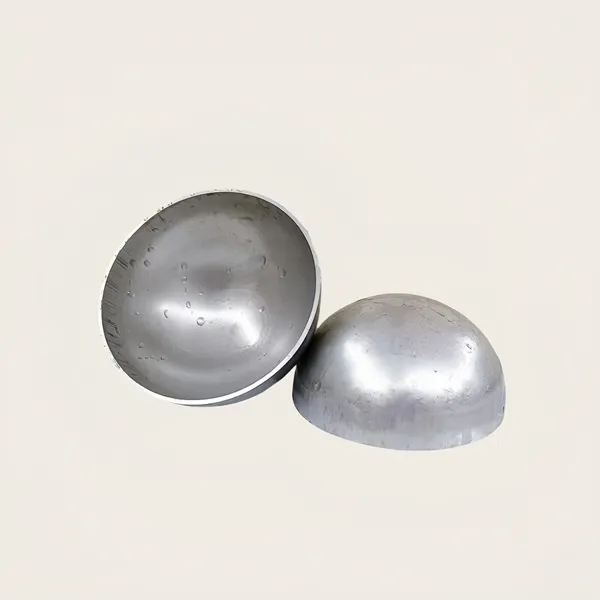
Another effect of pressure is stress concentration. When the pressure acts on the dish head, the stress is not evenly distributed across its surface. Certain areas, like the junction between the dish head and the cylindrical shell of the vessel, experience higher stress levels. This stress concentration can lead to the formation of cracks over time, especially if the material of the dish head is already under some form of pre - existing stress, like residual stress from the manufacturing process.
The shape of the dish head also plays a role in how it responds to pressure. For example, hemispherical dish heads, like the Pressure Vessel Hemispherical Dished End, are known for their excellent pressure - bearing capabilities. Their symmetrical shape allows the pressure to be distributed more evenly across the surface, reducing the chances of stress concentration and deformation. On the other hand, torispherical dish heads have a more complex shape with a knuckle radius, which can lead to higher stress levels at the knuckle area under pressure.
The material of the steel dish head is another important factor. Different types of steel have different mechanical properties, such as yield strength and ductility. A high - strength steel dish head can withstand higher pressures before deforming compared to a lower - strength one. However, high - strength steels might also be more brittle, which means they're more likely to crack under stress.
As a supplier, I always recommend choosing the right type of dish head and material based on the specific pressure requirements of your application. For instance, if you're dealing with high - pressure applications, a Hot Formed Tank Heads might be a good option. Hot forming can improve the mechanical properties of the steel, making it more resistant to pressure - induced deformation.
In addition to the type of dish head and material, the manufacturing process also affects how the dish head responds to pressure. Proper manufacturing techniques, such as accurate forming and welding, can ensure that the dish head has the right shape and structure to withstand the pressure. Any defects in the manufacturing process, like improper welding or uneven forming, can create weak points in the dish head, increasing the risk of failure under pressure.
So, how can you tell if your steel dish head is being affected by pressure? One way is to conduct regular inspections. Look for signs of deformation, such as bulging or uneven surfaces. You can also use non - destructive testing methods, like ultrasonic testing or radiographic testing, to detect any internal cracks or defects.
If you notice any signs of pressure - related damage, it's important to take action immediately. Depending on the severity of the damage, you might need to repair or replace the dish head. Ignoring the problem can lead to more serious issues down the line, which can be costly and dangerous.
As a supplier, I'm here to help you make the right choices when it comes to steel dish heads. We offer a wide range of Ms Dish End options, each designed to meet different pressure requirements and application needs. Whether you're looking for a standard dish head or a custom - made one, we've got you covered.
If you're in the market for steel dish heads, or if you have any questions about how pressure affects their shape, don't hesitate to reach out. We can provide you with detailed information, technical support, and competitive pricing. Let's work together to ensure the safety and efficiency of your industrial equipment.
References
- ASME Boiler and Pressure Vessel Code
- "Pressure Vessel Design Handbook" by Dennis R. Moss and Joseph P. Moore
- Various industry research papers on the mechanical behavior of steel under pressure.