

In the aerospace industry, where every gram counts, the lightweight requirements for steel dish heads are of paramount importance. As a seasoned supplier of steel dish heads, I've witnessed firsthand the evolving demands and challenges in this high - tech field. This blog post aims to explore what exactly these lightweight requirements entail, the reasons behind them, and how we, as a supplier, can meet these stringent needs.
The Significance of Lightweight in the Aerospace Industry
The aerospace industry is characterized by its pursuit of efficiency, performance, and safety. Weight reduction plays a crucial role in achieving these goals. A lighter aircraft or spacecraft consumes less fuel, which not only reduces operational costs but also has a positive environmental impact. Moreover, lower weight allows for increased payload capacity, enabling more equipment, supplies, or passengers to be carried.
In the case of steel dish heads, which are used in various aerospace applications such as pressure vessels, fuel tanks, and engine components, reducing weight without compromising strength and integrity is a delicate balancing act. These dish heads need to withstand extreme conditions, including high pressures, temperature variations, and mechanical stresses.
Factors Influencing Lightweight Requirements
Material Selection
The choice of steel is fundamental to meeting lightweight requirements. Advanced high - strength steels (AHSS) are often preferred in the aerospace industry. These steels offer a high strength - to - weight ratio, meaning they can provide the necessary strength while being lighter than traditional steels. For example, some AHSS can have a yield strength of over 1000 MPa, allowing for thinner wall thicknesses in dish heads without sacrificing performance.
Design Optimization
Innovative design is another key factor. Engineers are constantly looking for ways to optimize the shape and structure of steel dish heads. For instance, Pressure Vessel Hemispherical Dished End designs can be engineered to distribute stress more evenly, reducing the need for excessive material. By using computer - aided design (CAD) and finite element analysis (FEA) tools, designers can simulate different load scenarios and refine the design to achieve the best balance between weight and strength.
Manufacturing Processes
The manufacturing process can also contribute to weight reduction. Precision forming techniques, such as hydroforming or spin forming, can produce dish heads with more consistent wall thicknesses and better surface finishes. These processes can reduce the amount of material required for post - processing and ensure that the final product meets the exacting standards of the aerospace industry.
Meeting the Lightweight Requirements as a Supplier
As a supplier of steel dish heads, we have implemented several strategies to meet the lightweight requirements of the aerospace industry.
Material Sourcing and Quality Control
We have established strong partnerships with leading steel manufacturers to source the highest - quality advanced steels. Our quality control team conducts rigorous inspections at every stage of the production process, from raw material receipt to final product delivery. This ensures that the steel used in our dish heads meets the strict specifications for strength, ductility, and corrosion resistance.
Design Collaboration
We work closely with our aerospace customers' engineering teams during the design phase. By sharing our expertise in steel manufacturing and dish head design, we can contribute to the development of optimized designs that meet both the lightweight and performance requirements. Our in - house design engineers use state - of - the - art software to create detailed models and perform simulations, providing valuable insights to the design process.
Advanced Manufacturing Technologies
Investing in advanced manufacturing technologies is a top priority for us. Our production facilities are equipped with the latest hydroforming and spin forming machines, which allow us to produce high - quality dish heads with precise dimensions and thin wall thicknesses. We also continuously improve our manufacturing processes through research and development, aiming to further reduce weight and improve efficiency.
Specific Lightweight Solutions for Different Aerospace Applications
Pressure Vessels
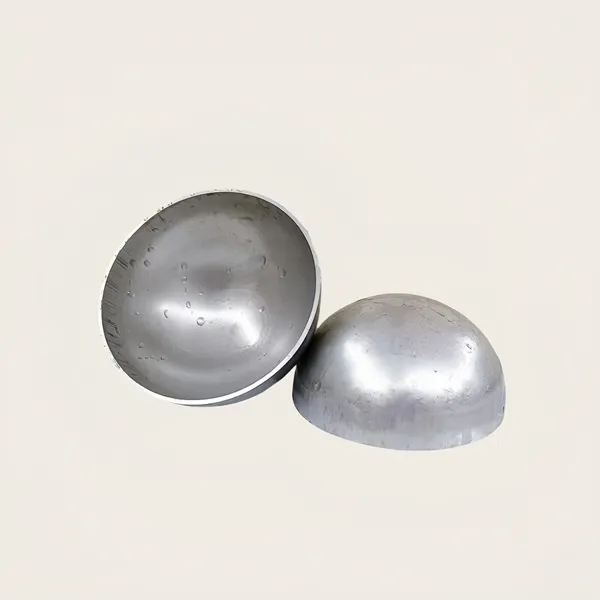
In pressure vessel applications, Torispherical Dished Head designs are commonly used. We have developed a range of lightweight torispherical dish heads using advanced steels and optimized manufacturing processes. These dish heads can withstand high internal pressures while minimizing weight, making them ideal for aerospace pressure vessels.

Fuel Tanks
For fuel tanks, lightweight and corrosion resistance are critical. Our Ms Dish End products are designed to meet these requirements. We use special corrosion - resistant steels and advanced coating techniques to protect the dish heads from the harsh environment of fuel storage. The lightweight design of these dish heads helps to reduce the overall weight of the fuel tank, contributing to improved fuel efficiency.
Conclusion
The lightweight requirements for steel dish heads in the aerospace industry are driven by the need for efficiency, performance, and safety. As a supplier, we are committed to meeting these challenges through material innovation, design optimization, and advanced manufacturing technologies. By working closely with our aerospace customers, we can provide high - quality, lightweight steel dish heads that meet the most demanding applications in the industry.
If you are in the aerospace industry and are looking for a reliable supplier of lightweight steel dish heads, we invite you to contact us for a detailed discussion. Our team of experts is ready to assist you in finding the best solutions for your specific requirements.
References
- ASM Handbook, Volume 1: Properties and Selection: Irons, Steels, and High - Performance Alloys. ASM International.
- Aerospace Materials and Processes Handbook. Society of Automotive Engineers (SAE).
- "Advanced High - Strength Steels for Automotive Applications" by J. G. Speer et al. International Journal of Materials Research.