

The shape of domed tank ends is a critical aspect that significantly impacts the functionality, efficiency, and safety of storage tanks. As a leading supplier of domed tank ends, I have witnessed firsthand the importance of understanding these shapes and their applications. In this blog, we will delve into the various shapes of domed tank ends, their characteristics, advantages, and how they are used in different industries.
Common Shapes of Domed Tank Ends
Hemispherical Ends
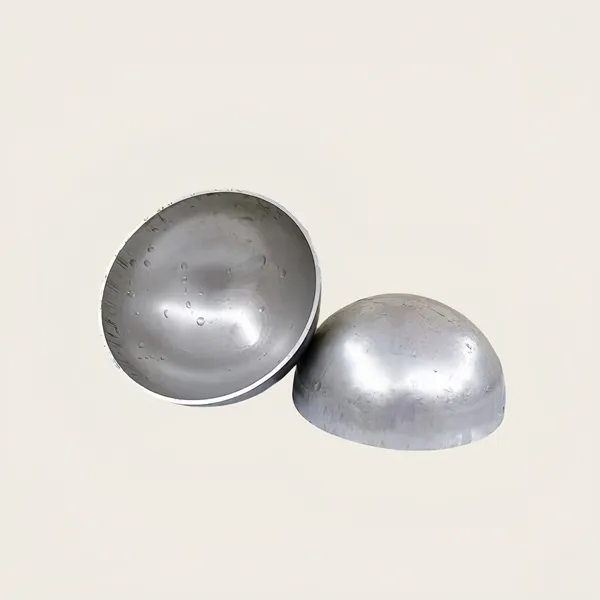
Hemispherical domed tank ends are one of the most popular shapes. As the name suggests, they are shaped like half of a sphere. This shape offers several advantages. Firstly, it provides the maximum volume for a given surface area, which means more storage capacity within the same overall dimensions of the tank. Secondly, hemispherical ends distribute stress evenly across the surface, making them ideal for high - pressure applications. They can withstand internal pressure better than many other shapes, reducing the risk of structural failure.
For example, in the chemical industry, where tanks often store volatile and high - pressure substances, hemispherical ends are commonly used. Our Hot Formed Tank Heads are precision - crafted to ensure the highest quality hemispherical domed tank ends. These hot - formed heads are made using advanced manufacturing techniques that enhance their strength and durability.
Ellipsoidal Ends
Ellipsoidal domed tank ends have an elliptical shape. They are a compromise between the hemispherical and flat ends. The ratio of the major to the minor axis of the ellipse can vary, but a common ratio is 2:1. Ellipsoidal ends are easier and more cost - effective to manufacture compared to hemispherical ends. They also offer good stress distribution, although not as uniform as hemispherical ends.
Ellipsoidal ends are widely used in general industrial storage applications, such as water storage tanks and some low - to medium - pressure chemical storage. Our Pressure Vessel Hemispherical Dished End products include ellipsoidal options that are designed to meet the specific requirements of different pressure vessels.
Torispherical Ends
Torispherical domed tank ends consist of a spherical section and a toroidal (ring - shaped) knuckle. The spherical section is in the center, and the toroidal knuckle connects it to the cylindrical body of the tank. This shape is often used when the tank needs to withstand a certain amount of pressure, but the cost of manufacturing a hemispherical end is prohibitive.
Torispherical ends are commonly found in steam boilers, food processing tanks, and some oil storage applications. The toroidal knuckle helps to reduce the stress concentration at the junction between the end and the tank body. Our Ms Dish End product line includes torispherical options that are made from high - quality mild steel, ensuring reliability and long - term performance.
Factors Influencing the Choice of Shape
Pressure Requirements
The internal pressure that the tank will be subjected to is a major factor in determining the shape of the domed tank end. High - pressure applications typically require hemispherical ends due to their superior stress - distribution capabilities. For low - pressure or atmospheric storage, ellipsoidal or torispherical ends may be sufficient and more cost - effective.
Volume and Space Constraints
If maximizing the storage volume within a limited space is a priority, hemispherical ends are the best choice. However, if space is not a major concern and cost is a significant factor, other shapes like ellipsoidal or torispherical ends can be considered.
Manufacturing and Cost
The complexity of manufacturing different shapes also affects the choice. Hemispherical ends are the most difficult and expensive to manufacture, while ellipsoidal and torispherical ends are relatively easier and more cost - effective.
Applications in Different Industries
Oil and Gas Industry
In the oil and gas industry, tanks are used for storing crude oil, refined products, and natural gas. High - pressure storage of natural gas often requires hemispherical domed tank ends to ensure safety and prevent leakage. For on - shore storage of crude oil, torispherical or ellipsoidal ends may be used depending on the pressure requirements and cost considerations.
Chemical Industry
Chemical storage tanks need to be resistant to corrosion and able to withstand the pressure of the stored chemicals. Hemispherical ends are commonly used for high - pressure chemical storage, while ellipsoidal and torispherical ends are used for low - to medium - pressure applications.
Food and Beverage Industry
Tanks in the food and beverage industry are used for storing ingredients, finished products, and water. These tanks need to meet strict hygiene standards. Ellipsoidal and torispherical ends are often used as they are easier to clean and maintain, and they can provide sufficient storage volume at a reasonable cost.
Our Commitment as a Supplier
As a supplier of domed tank ends, we are committed to providing high - quality products that meet the diverse needs of our customers. Our manufacturing process adheres to strict quality control standards to ensure that each domed tank end is of the highest quality. We use advanced materials and manufacturing techniques to enhance the strength, durability, and corrosion resistance of our products.
We also offer customized solutions to meet the specific requirements of different customers. Whether you need a hemispherical end for a high - pressure application or an ellipsoidal end for a general storage tank, we can work with you to design and manufacture the perfect domed tank end.

Contact Us for Procurement and洽谈
If you are in the market for domed tank ends, we invite you to contact us for procurement discussions. Our team of experts is ready to assist you in choosing the right shape and type of domed tank end for your specific application. We can provide detailed product information, quotations, and technical support to ensure that you make an informed decision.
References
- "Pressure Vessel Design Handbook" by Dennis R. Moss
- "Tank Design and Construction" by American Petroleum Institute
- Industry standards and guidelines from relevant regulatory bodies such as ASME and API.