

How to Ensure the Dimensional Stability of ASME Elliptical Heads During Long - term Use
As a supplier of ASME elliptical heads, I understand the critical importance of dimensional stability in these components. ASME elliptical heads are widely used in various industries, such as chemical, petrochemical, food processing, and power generation. They serve as essential parts of pressure vessels, storage tanks, and other equipment, where maintaining precise dimensions over the long - term is crucial for safety, efficiency, and performance.
Understanding the Factors Affecting Dimensional Stability
Several factors can influence the dimensional stability of ASME elliptical heads during long - term use. Firstly, material properties play a significant role. The type of steel or alloy used in manufacturing the heads has different mechanical and physical characteristics. For example, stainless steel has good corrosion resistance, but its thermal expansion coefficient can cause dimensional changes under temperature variations. High - strength low - alloy steels may offer better strength - to - weight ratios, but they can be more susceptible to stress - corrosion cracking, which can also affect dimensions.
Secondly, manufacturing processes have a direct impact. Improper forming, welding, or heat treatment can introduce internal stresses in the elliptical heads. During forming, if the head is not shaped accurately according to the ASME standards, it may have uneven thickness distribution. Welding can cause local heating and cooling, leading to residual stresses that can cause distortion over time. Heat treatment, if not carried out correctly, may not relieve these stresses effectively.
Thirdly, operating conditions are key factors. High - pressure environments can cause elastic and plastic deformation of the heads. Temperature fluctuations, especially rapid heating and cooling cycles, can lead to thermal expansion and contraction, which may result in dimensional changes. Corrosive media in the operating environment can also erode the surface of the heads, gradually reducing their thickness and altering their dimensions.
Strategies for Ensuring Dimensional Stability
- Material Selection
- Choose materials carefully based on the specific operating conditions. For applications in corrosive environments, corrosion - resistant alloys such as duplex stainless steel or nickel - based alloys may be more suitable. These materials can withstand the chemical attack and maintain their integrity over a long period.
- Ensure that the material meets the ASME standards. This includes checking the chemical composition, mechanical properties, and traceability of the material. For example, the carbon content in the steel should be within the specified range to ensure proper weldability and strength.
- Precise Manufacturing Processes
- Forming: Use advanced forming techniques such as hydraulic pressing or spinning to ensure accurate shaping of the elliptical heads. These methods can achieve more uniform thickness distribution and better dimensional accuracy compared to traditional methods. During forming, strict quality control measures should be in place to monitor the dimensions at each stage.
- Welding: Employ qualified welders and follow the ASME welding codes. Pre - heating and post - weld heat treatment are essential steps to reduce residual stresses. For example, pre - heating the material before welding can slow down the cooling rate and prevent the formation of hard and brittle microstructures. Post - weld heat treatment can relieve the residual stresses introduced during welding.
- Heat Treatment: Develop a proper heat treatment plan based on the material and manufacturing process. Normalizing, annealing, or stress - relieving heat treatments can be used to improve the mechanical properties and relieve internal stresses. For instance, stress - relieving heat treatment at a specific temperature and time can significantly reduce the residual stresses in the elliptical heads.
- Quality Control During Manufacturing
- Implement in - process inspection and testing. This includes non - destructive testing methods such as ultrasonic testing, radiographic testing, and magnetic particle testing to detect any internal defects or discontinuities in the heads. These defects can affect the long - term dimensional stability of the heads.
- Measure the dimensions accurately at various stages of manufacturing. Use precision measuring tools such as calipers, micrometers, and coordinate measuring machines (CMMs). Regularly compare the measured dimensions with the ASME standards and the customer's specifications. Any deviations should be corrected immediately.
- Monitoring During Long - term Use
- Install monitoring systems in the equipment where the elliptical heads are used. These systems can measure parameters such as pressure, temperature, and vibration. By continuously monitoring these parameters, any abnormal changes that may affect the dimensional stability can be detected early.
- Conduct regular inspections of the elliptical heads. Visual inspections can be carried out to check for any signs of corrosion, cracking, or deformation. Ultrasonic thickness measurements can be used to monitor the thickness change over time. If any issues are detected, appropriate maintenance or replacement measures can be taken promptly.
Our Product Offerings and Their Dimensional Stability Features
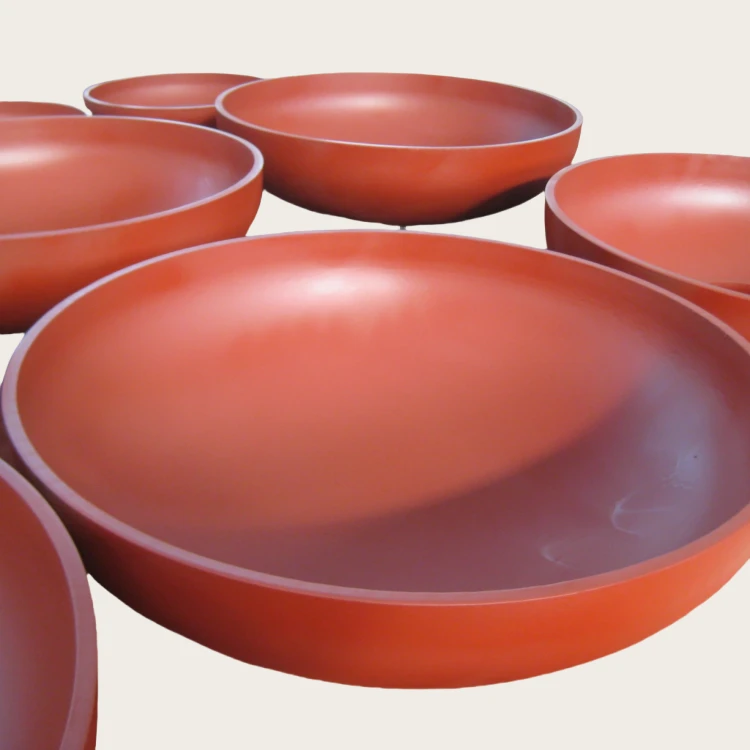
As a supplier, we offer a wide range of ASME elliptical heads, including Flanged and Dished Polished Heads, ASME Standard Dished Head for Storage Tank, and ASME Standard Tankhead.
Our flanged and dished polished heads are manufactured with high - quality materials and advanced processes. The polishing process not only gives the heads a smooth surface but also helps to remove any surface defects that could potentially affect dimensional stability. The flanged design provides a secure connection, and the precise forming ensures accurate dimensions.
The ASME standard dished heads for storage tanks are designed to withstand the specific pressure and temperature conditions in storage applications. We use strict quality control measures during manufacturing to ensure that these heads have uniform thickness and minimal internal stresses, which are essential for long - term dimensional stability.
Our ASME standard tankheads are made to meet the highest industry standards. We carefully select materials and follow the ASME codes throughout the manufacturing process. These tankheads are suitable for a variety of industries and can maintain their dimensional stability under different operating conditions.

Conclusion and Call to Action
Ensuring the dimensional stability of ASME elliptical heads during long - term use is a complex but achievable goal. By understanding the factors affecting dimensional stability, implementing appropriate strategies in material selection, manufacturing processes, quality control, and monitoring, we can provide high - quality elliptical heads that meet the needs of our customers.
If you are in need of ASME elliptical heads for your projects, we invite you to contact us for more information and to discuss your specific requirements. Our team of experts is ready to assist you in selecting the right products and ensuring that they meet your dimensional stability needs.
References
- ASME Boiler and Pressure Vessel Code.
- "Materials for Pressure Vessels" by various industry publications.
- Research papers on the manufacturing and performance of ASME elliptical heads in academic journals.