

Hey there! As a supplier in the dish head forming business, I've seen firsthand the importance of ensuring the stability of the forming process during long-term dish head production. It's not just about churning out products; it's about maintaining a high level of quality and consistency over time. In this blog, I'll share some insights on how to achieve that.

Understanding the Basics of Dish Head Forming
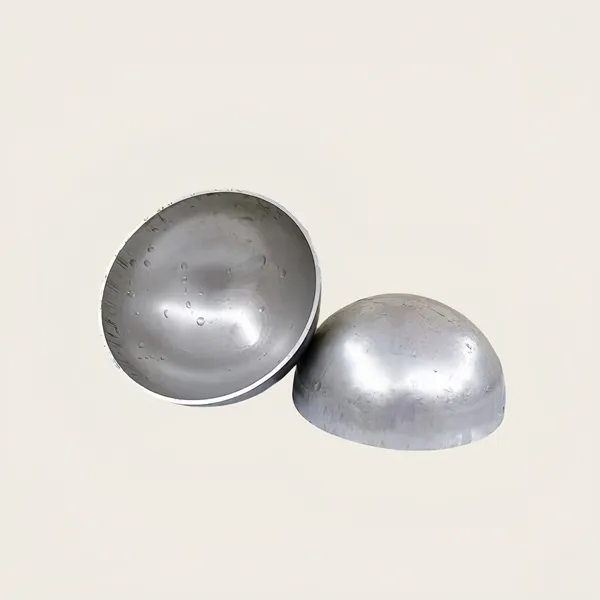
Before we dive into how to ensure stability, let's quickly go over what dish head forming is. Dish heads are essential components in pressure vessels, and they come in various shapes and sizes, like Pressure Vessel Hemispherical Dished End and Torispherical Dished Head. The forming process involves shaping a flat piece of metal, usually steel, into the desired dish shape. We commonly work with Steel Dish Heads because of their strength and durability.
Material Selection and Quality Control
One of the first steps in ensuring a stable forming process is choosing the right materials. You can't expect a stable production run if you're using subpar metal. We always source our steel from reliable suppliers. Before we start the forming process, we conduct thorough quality checks on the raw materials. This includes checking the chemical composition, mechanical properties, and surface quality. Any material that doesn't meet our standards is rejected.
For example, if the steel has an inconsistent chemical composition, it can lead to uneven forming. Some areas might be more malleable than others, causing the dish head to have irregularities. By having strict material quality control, we can avoid these issues and ensure that every piece of steel we use is suitable for the forming process.
Equipment Maintenance and Calibration
Our forming equipment is the heart of our operation. Without well-maintained and calibrated machines, achieving a stable forming process is almost impossible. We have a regular maintenance schedule for all our equipment. This includes cleaning, lubricating, and inspecting the machines for any signs of wear and tear.
Calibration is also crucial. Over time, the settings on our forming machines can drift, which can affect the accuracy of the dish head shapes. We regularly calibrate the machines to ensure that they are operating within the specified tolerances. For instance, the pressure and temperature settings need to be precise. If the pressure is too high, it can cause the steel to crack during forming. If it's too low, the dish head might not form properly.
Process Monitoring and Adjustment
During the long-term production of dish heads, we continuously monitor the forming process. We use sensors and other monitoring tools to keep track of various parameters, such as temperature, pressure, and forming speed. If any of these parameters deviate from the set values, we take immediate action to adjust them.
Let's say the temperature in the forming area starts to rise above the optimal range. This could be due to friction or a problem with the cooling system. We'll stop the production briefly, identify the cause, and make the necessary adjustments. By constantly monitoring and adjusting the process, we can prevent small issues from turning into major problems that could disrupt the stability of the production.
Operator Training and Skill Development
Our operators are the ones who actually run the forming equipment. Their skills and knowledge play a huge role in ensuring the stability of the forming process. We provide comprehensive training to all our operators. They learn about the different types of dish heads, the forming process, and how to operate the equipment safely and efficiently.
We also encourage continuous skill development. We organize regular workshops and training sessions to keep our operators updated on the latest techniques and best practices in dish head forming. An experienced and well-trained operator can quickly identify and solve problems during the production process. They can also make small adjustments on the fly to ensure that the forming process remains stable.
Quality Assurance and Testing
Even with all the controls in place, we still conduct rigorous quality assurance and testing on the finished dish heads. We use a variety of testing methods, such as visual inspection, dimensional measurement, and non-destructive testing. Visual inspection helps us spot any obvious surface defects, like cracks or scratches. Dimensional measurement ensures that the dish heads meet the required specifications. Non-destructive testing, such as ultrasonic testing, can detect internal defects that might not be visible to the naked eye.
If a dish head fails any of the tests, we don't just discard it. We analyze the cause of the failure and use it as an opportunity to improve our process. This way, we can prevent similar issues from occurring in future production runs.
Supplier-Customer Collaboration
We believe that collaboration with our customers is essential for ensuring the stability of the forming process. We work closely with our customers to understand their specific requirements for the dish heads. This includes the shape, size, material, and any special features they need.
By having a clear understanding of our customers' needs, we can optimize our production process to meet those requirements. We also keep our customers informed about the production progress and any potential issues that might arise. This open communication helps us build trust and ensures that we can deliver high-quality dish heads that meet their expectations.
Continuous Improvement
The dish head forming industry is constantly evolving. New materials, technologies, and techniques are emerging all the time. To ensure the long-term stability of our forming process, we are committed to continuous improvement. We regularly review our production processes, identify areas for improvement, and implement changes.
For example, we might invest in new forming equipment that is more efficient and accurate. Or we might adopt new quality control methods to detect defects earlier in the process. By continuously improving our processes, we can stay competitive in the market and ensure that we can provide our customers with the best possible dish heads.
Conclusion
Ensuring the stability of the forming process in long-term dish head production is a complex but achievable goal. It requires a combination of careful material selection, proper equipment maintenance, continuous process monitoring, well-trained operators, rigorous quality assurance, and strong customer collaboration. By following these practices, we can produce high-quality dish heads consistently over time.
If you're in the market for dish heads and are looking for a reliable supplier, we'd love to talk to you. Whether you need Pressure Vessel Hemispherical Dished End, Torispherical Dished Head, or Steel Dish Heads, we have the expertise and experience to meet your needs. Contact us to start a procurement discussion and see how we can work together to get you the best dish heads for your projects.
References
- Smith, J. (2020). "Best Practices in Metal Forming for Pressure Vessel Components." Manufacturing Journal.
- Johnson, R. (2019). "Quality Control in Dish Head Production." Industrial Engineering Review.
- Brown, A. (2021). "Advances in Steel Forming Technologies." Materials Science Magazine.