

As a supplier of ASME elliptical heads, I've delved deep into the various properties of these crucial components. Among them, creep properties are of significant importance, especially in applications where the heads are subjected to high temperatures and constant stress over extended periods.
Understanding Creep in Materials
Creep is the slow and progressive deformation of a material under a constant load or stress at an elevated temperature. It occurs in three main stages: primary creep, secondary creep, and tertiary creep. In the primary creep stage, the deformation rate is relatively high initially but decreases over time as the material undergoes internal structural changes. This is followed by the secondary creep stage, where the deformation rate becomes relatively constant. The tertiary creep stage is characterized by an accelerating deformation rate, which eventually leads to the failure of the material.
Creep Properties of ASME Elliptical Heads
Material Composition
The creep properties of ASME elliptical heads are highly dependent on the material used in their manufacturing. Common materials for these heads include carbon steel, stainless steel, and alloy steel. Each material has its own unique creep characteristics.
Carbon steel, for example, is widely used due to its relatively low cost and good mechanical properties. However, at high temperatures, carbon steel may experience significant creep deformation. The presence of impurities and alloying elements in carbon steel can also affect its creep resistance. For instance, the addition of small amounts of elements such as manganese and silicon can improve the creep strength to some extent.
Stainless steel, on the other hand, offers better creep resistance compared to carbon steel, especially in corrosive environments. The chromium content in stainless steel forms a protective oxide layer on the surface, which helps to prevent oxidation and corrosion at high temperatures. Additionally, the addition of nickel and other alloying elements can further enhance the creep properties of stainless steel.
Alloy steel is specifically designed to have superior creep resistance. By carefully selecting the alloying elements and their proportions, alloy steel can be tailored to meet the specific requirements of high - temperature applications. For example, steels alloyed with molybdenum, vanadium, and niobium are known for their excellent creep strength at elevated temperatures.
Temperature and Stress Effects
Temperature and stress are two critical factors that influence the creep properties of ASME elliptical heads. As the temperature increases, the atomic mobility within the material also increases, making it easier for dislocations to move and causing the material to deform more readily. At the same time, higher stress levels also accelerate the creep process.
In applications where ASME elliptical heads are used, such as in pressure vessels and storage tanks, they are often exposed to high internal pressures and elevated temperatures. For example, in a chemical processing plant, the elliptical heads may be subjected to temperatures ranging from 300°C to 600°C and significant internal pressures. Under these conditions, the creep deformation of the heads needs to be carefully considered to ensure the long - term safety and reliability of the equipment.
To accurately predict the creep behavior of ASME elliptical heads, engineers often use creep models and equations. These models take into account factors such as temperature, stress, material properties, and time to estimate the amount of creep deformation over a given period.
Design Considerations
When designing ASME elliptical heads, the creep properties must be taken into account to ensure that the heads can withstand the expected operating conditions. This involves selecting the appropriate material based on the temperature and stress levels, as well as determining the optimal thickness of the head.

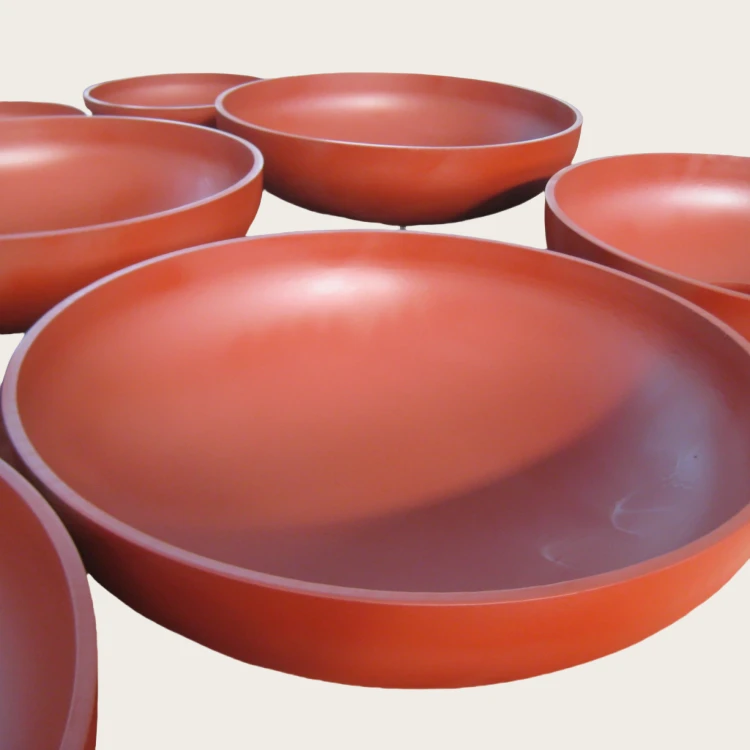
A thicker head can generally withstand higher stresses and has better creep resistance. However, increasing the thickness also increases the cost and weight of the head. Therefore, a balance needs to be struck between the required creep resistance and the economic and practical considerations.
In addition, the shape of the elliptical head also affects its creep behavior. The elliptical shape distributes the stress more evenly compared to other shapes, reducing the concentration of stress at certain points. This helps to minimize the creep deformation and improve the overall performance of the head.
Applications and Importance of Creep Resistance
ASME elliptical heads are widely used in various industries, including the oil and gas, chemical, and power generation industries. In these industries, the equipment often operates at high temperatures and pressures for long periods. Therefore, the creep resistance of the elliptical heads is crucial for the safe and efficient operation of the equipment.
In the oil and gas industry, ASME elliptical heads are used in storage tanks and pressure vessels for storing and transporting various fluids. These tanks and vessels may be exposed to high - temperature environments during the refining and processing operations. If the elliptical heads do not have sufficient creep resistance, they may deform over time, leading to leaks and potential safety hazards.
In the chemical industry, the equipment is often subjected to corrosive chemicals and high - temperature conditions. The creep resistance of the ASME elliptical heads ensures that the equipment can maintain its structural integrity and prevent the leakage of dangerous chemicals.
In the power generation industry, ASME elliptical heads are used in boilers and steam turbines. These components operate at extremely high temperatures and pressures. The creep resistance of the elliptical heads is essential for the long - term performance and reliability of the power generation equipment.
Conclusion
As a supplier of ASME elliptical heads, I understand the critical importance of the creep properties of these components. By carefully selecting the material, considering the temperature and stress effects, and making appropriate design choices, we can ensure that our elliptical heads have excellent creep resistance and meet the strict requirements of various industries.
If you are in need of high - quality ASME elliptical heads with superior creep properties, we are here to provide you with the best solutions. Our products, such as the ASME Standard Tankhead, ASME 2 1 Elliptical Head, and ASME Standard Dished Head for Storage Tank, are designed and manufactured to the highest standards. We welcome you to contact us for further information and to discuss your specific requirements. We look forward to the opportunity to work with you and provide you with the most suitable ASME elliptical heads for your applications.
References
- ASME Boiler and Pressure Vessel Code, Section VIII, Division 1.
- "Creep of Engineering Materials" by K. E. Easterling.
- "Materials Science and Engineering: An Introduction" by William D. Callister, Jr. and David G. Rethwisch.