

Hey there! I'm a supplier of ASME Tank Heads, and today I want to chat about the dimensions of these essential components. ASME tank heads play a crucial role in various industries, from chemical processing to food and beverage. Understanding their standard dimensions is key for anyone involved in tank design, manufacturing, or procurement.
First off, let's talk about what ASME is. The American Society of Mechanical Engineers (ASME) sets the standards for the design, fabrication, and inspection of pressure vessels, including tank heads. These standards ensure safety, reliability, and quality in the industry. When we refer to ASME tank heads, we're talking about heads that meet the strict criteria outlined in the ASME Boiler and Pressure Vessel Code.
There are several types of ASME tank heads, each with its own unique dimensions and applications. One of the most common types is the hemispherical head. A Hemispherical Head ASME Code offers excellent strength and pressure resistance. It's shaped like half a sphere, and its dimensions are relatively straightforward. The radius of a hemispherical head is equal to the radius of the tank shell it's attached to. For example, if you have a tank with a 36-inch diameter shell, the hemispherical head will also have a 36-inch radius. This symmetry makes it ideal for high-pressure applications where even stress distribution is crucial.
Another popular type is the ASME flanged and dished head. The ASME Flanged and Dished Head has a more complex shape. It consists of a dished section, which is a curved part, and a flange, which is a flat, circular ring at the edge. The dished section can have different radii and knuckle radii, depending on the specific design requirements. The knuckle radius is the rounded part where the dished section meets the flange. Standard dimensions for ASME flanged and dished heads are specified in the ASME code, which takes into account factors like the tank's operating pressure, temperature, and material.
Now, let's get into the nitty-gritty of standard dimensions. The diameter of an ASME tank head is one of the most critical dimensions. It must match the diameter of the tank shell to ensure a proper fit. Common diameters range from a few inches to several feet, depending on the application. For small-scale industrial processes or laboratory equipment, you might see tank heads with diameters as small as 6 inches. On the other hand, large storage tanks in the oil and gas industry can have tank heads with diameters of 10 feet or more.

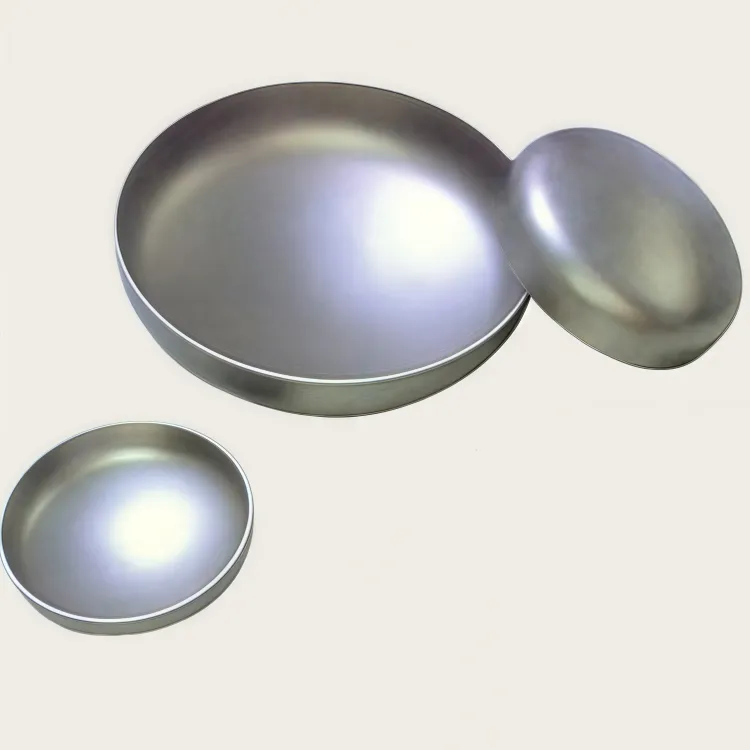
The thickness of the tank head is another important dimension. It's determined by the tank's operating pressure, temperature, and the material used. Thicker heads are required for higher-pressure applications to prevent failure. The ASME code provides formulas and tables to calculate the minimum required thickness based on these factors. For example, a tank operating at high pressure and temperature might need a tank head that's several inches thick, while a low-pressure tank could get away with a much thinner head.
The height of the tank head also varies depending on the type. Hemispherical heads have a height equal to their radius. For flanged and dished heads, the height is determined by the dished section's depth and the flange's width. The depth of the dished section affects the volume of the tank and the stress distribution within the head. A deeper dished section can increase the tank's capacity but may also require a thicker head to withstand the pressure.
In addition to these primary dimensions, there are also secondary dimensions that are important for proper installation and functionality. For example, the bolt hole pattern on the flange of a flanged and dished head must match the mating flange on the tank shell. The number, size, and spacing of the bolt holes are specified in the ASME code to ensure a secure and leak-free connection.
When it comes to materials, ASME tank heads can be made from a variety of metals, including carbon steel, stainless steel, and alloy steel. Each material has its own properties and is suitable for different applications. Carbon steel is commonly used for general-purpose tanks due to its affordability and good strength. Stainless steel is preferred for applications where corrosion resistance is crucial, such as in the food and beverage industry or chemical processing. Alloy steel is used for high-temperature and high-pressure applications where additional strength and durability are required.
As a supplier of ASME Tank Heads, I understand the importance of providing accurate dimensions and high-quality products. We work closely with our customers to ensure that the tank heads we supply meet their specific requirements. Whether you need a custom-sized hemispherical head for a unique project or a standard flanged and dished head for a common application, we've got you covered.
If you're in the market for ASME tank heads, I encourage you to reach out and start a conversation. We can discuss your project in detail, answer any questions you may have, and provide you with a quote. Our team of experts is here to help you make the right choice and ensure that your tank operates safely and efficiently.
In conclusion, understanding the dimensions of standard ASME tank heads is essential for anyone involved in the design, manufacturing, or procurement of pressure vessels. Whether it's the diameter, thickness, height, or secondary dimensions, each plays a crucial role in the performance and safety of the tank. As a trusted supplier, we're committed to providing top-quality ASME tank heads that meet the highest industry standards. So, if you're looking for reliable tank heads for your next project, don't hesitate to contact us for more information and to start the procurement process.
References
- ASME Boiler and Pressure Vessel Code
- Industry standards and guidelines for pressure vessel design and manufacturing