

When it comes to steel dish heads, the surface finish is not just about aesthetics; it plays a crucial role in functionality, durability, and performance. As a leading supplier of Steel Dish Heads, I understand the importance of offering a variety of surface finish options to meet the diverse needs of our customers. In this blog post, I will explore the different surface finish options available for steel dish heads and their respective advantages.
1. Mill Finish
Mill finish is the most basic and common surface finish for steel dish heads. It is the natural state of the steel after it has been manufactured at the mill. The surface has a dull, gray appearance and may have some minor imperfections such as mill scale, oxide layers, or slight surface irregularities.
Advantages:

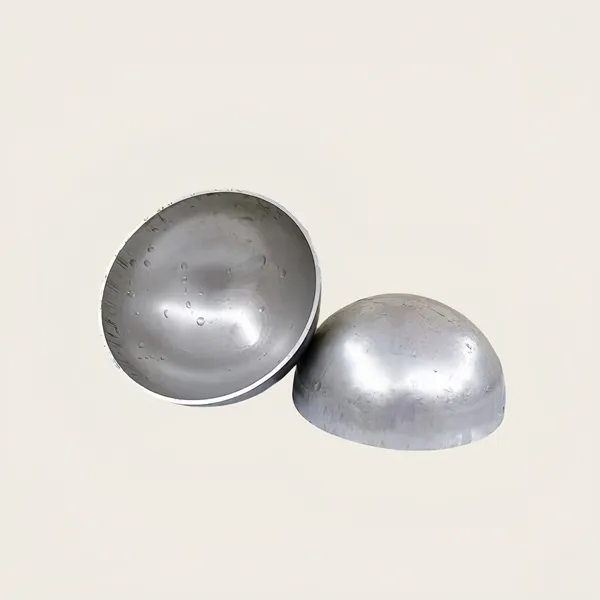
- Cost - effective: Mill finish is the least expensive option as it requires no additional processing. This makes it a popular choice for applications where cost is a major concern and the appearance of the dish head is not critical.
- Availability: Since it is the standard finish from the mill, mill - finished steel dish heads are readily available and can be delivered quickly.
Disadvantages:
- Limited corrosion resistance: The mill scale and oxide layers can be prone to corrosion, especially in harsh environments. This may require additional protective coatings or treatments if the dish head is to be used in corrosive conditions.
- Aesthetically unappealing: The dull and uneven appearance may not be suitable for applications where visual appeal is important.
2. Pickled Finish
Pickling is a chemical treatment process used to remove the mill scale, rust, and other impurities from the surface of the steel. In this process, the steel dish head is immersed in a pickling solution, typically an acid such as hydrochloric acid or sulfuric acid.
Advantages:
- Improved corrosion resistance: By removing the mill scale and rust, pickled finish provides better corrosion resistance compared to mill finish. The clean surface also allows for better adhesion of additional coatings if required.
- Smoother surface: The pickling process results in a smoother surface compared to mill finish, which can be beneficial for applications where a more uniform surface is desired.
Disadvantages:
- Environmental concerns: The pickling process involves the use of strong acids, which can be harmful to the environment if not properly managed. Disposal of the spent pickling solution requires careful handling to comply with environmental regulations.
- Surface roughness: Although it is smoother than mill finish, pickled finish may still have some surface roughness, which may not be suitable for applications that require a highly polished surface.
3. Passivated Finish
Passivation is a process that enhances the corrosion resistance of stainless steel by creating a thin, protective oxide layer on the surface. After pickling or machining, the steel dish head is treated with a passivating solution, usually nitric acid or citric acid.
Advantages:
- Excellent corrosion resistance: The passivated layer provides a high level of protection against corrosion, especially in aggressive environments. This makes passivated steel dish heads suitable for applications in the chemical, food, and pharmaceutical industries.
- Long - term durability: The protective oxide layer helps to prevent the formation of rust and other forms of corrosion over time, extending the service life of the dish head.
Disadvantages:
- Process complexity: Passivation requires careful control of the process parameters, such as the concentration of the passivating solution, temperature, and immersion time. Improper passivation can result in ineffective corrosion protection.
- Cost: The additional processing steps involved in passivation make it more expensive than mill or pickled finish.
4. Polished Finish
Polishing is a mechanical process used to create a smooth, shiny surface on the steel dish head. There are different levels of polishing, ranging from a simple buffing to a high - gloss mirror finish.
Advantages:
- Aesthetic appeal: A polished finish provides a visually appealing surface, making it suitable for applications where appearance is important, such as in architectural or decorative uses.
- Ease of cleaning: The smooth surface is easier to clean and maintain, which is crucial for applications in the food, beverage, and pharmaceutical industries where hygiene is a top priority.
- Reduced friction: A polished surface can reduce friction, which may be beneficial in applications where the dish head comes into contact with other components.
Disadvantages:
- High cost: Polishing is a labor - intensive process that requires specialized equipment and skilled operators. This makes it the most expensive surface finish option.
- Surface damage: The polished surface is more prone to scratches and other forms of damage during handling and installation.
5. Galvanized Finish
Galvanizing is a process of applying a zinc coating to the steel to protect it from corrosion. There are two main types of galvanizing: hot - dip galvanizing and electro - galvanizing.
Hot - dip Galvanizing
In hot - dip galvanizing, the steel dish head is immersed in a bath of molten zinc at a temperature of around 450°C. The zinc reacts with the steel to form a series of zinc - iron alloy layers.
Advantages:
- Superior corrosion protection: The zinc coating provides excellent protection against corrosion, even in harsh outdoor environments. The alloy layers also offer long - term durability.
- Self - healing: If the zinc coating is damaged, the exposed zinc will corrode preferentially, protecting the underlying steel. This is known as the sacrificial anode effect.
Disadvantages:
- Thick coating: The hot - dip galvanizing process results in a relatively thick coating, which may not be suitable for applications where dimensional accuracy is critical.
- Appearance: The surface may have a rough and uneven appearance, which may not be aesthetically pleasing for some applications.
Electro - galvanizing
Electro - galvanizing is an electrochemical process where a thin layer of zinc is deposited on the steel surface using an electric current.
Advantages:
- Thin and uniform coating: Electro - galvanizing provides a thin, uniform zinc coating, which is suitable for applications where dimensional accuracy is important.
- Aesthetically pleasing: The surface has a smoother and more uniform appearance compared to hot - dip galvanizing.
Disadvantages:
- Limited corrosion protection: The thin zinc coating may not provide the same level of long - term corrosion protection as hot - dip galvanizing, especially in harsh environments.
6. Coated Finish
Coating the steel dish head with a protective paint or other organic coatings is another option to enhance corrosion resistance and improve appearance. There are various types of coatings available, such as epoxy coatings, polyurethane coatings, and powder coatings.
Advantages:
- Customizable appearance: Coatings can be applied in a wide range of colors and finishes, allowing for customization to meet the specific aesthetic requirements of the application.
- Enhanced corrosion resistance: Depending on the type of coating, it can provide excellent protection against corrosion, chemicals, and abrasion.
Disadvantages:
- Coating failure: Over time, the coating may peel, crack, or blister, especially if the surface preparation is inadequate or if the coating is exposed to extreme conditions.
- Maintenance requirements: Coated surfaces may require periodic maintenance, such as touch - up painting, to maintain their appearance and performance.
As a supplier of Steel Dish Heads, we offer a wide range of surface finish options to meet the specific needs of our customers. Whether you need a cost - effective mill finish for a simple application or a highly polished and corrosion - resistant finish for a demanding environment, we have the expertise and resources to provide the right solution.
If you are in the market for Torispherical Dished Head or Pressure Vessel Hemispherical Dished End with the perfect surface finish, we encourage you to contact us. Our team of experts will work closely with you to understand your requirements and recommend the most suitable surface finish option for your project. We are committed to providing high - quality products and excellent customer service.
References
- ASM Handbook Volume 5: Surface Engineering. ASM International.
- Corrosion Basics: An Introduction. National Association of Corrosion Engineers (NACE).
- Steel Construction Manual. American Institute of Steel Construction (AISC).