

Hey there! I'm a supplier in the dish end fabrication business, and I've seen firsthand how different fabrication processes can have a huge impact on dish end performance. In this blog, I'm gonna break down these effects and why they matter to you.
Let's start with the basics. Dish ends are crucial components in various industries, especially in pressure vessels. They're used to seal the ends of these vessels, and their performance can directly affect the safety and efficiency of the entire system. There are several fabrication processes out there, each with its own set of pros and cons.
One of the most common processes is hot forming. This involves heating the metal to a high temperature and then shaping it into the desired dish end shape. The main advantage of hot forming is that it allows for greater flexibility in terms of the shapes and sizes that can be achieved. You can create complex geometries that might be difficult or impossible with other methods.
When you heat the metal during hot forming, it becomes more malleable. This means you can stretch and bend it more easily without cracking or breaking. As a result, the dish ends produced through hot forming tend to have better overall integrity. They can withstand higher pressures and stresses, which is super important in applications where safety is a top priority.
However, hot forming also has its drawbacks. Heating the metal to such high temperatures can cause changes in its microstructure. This might lead to a reduction in the material's strength and corrosion resistance over time. So, if you're using the dish ends in a corrosive environment, you might need to take extra steps to protect them.
Another popular fabrication process is cold forming. Unlike hot forming, cold forming doesn't involve heating the metal. Instead, it uses mechanical force to shape the metal at room temperature. This process is often preferred when you need to maintain the original properties of the metal.
Cold forming is great for producing dish ends with high precision. Since there's no heating involved, there's less chance of distortion or warping. This means you can get very accurate dimensions, which is crucial for ensuring a proper fit in the pressure vessel.
The dish ends made through cold forming also tend to have a smoother surface finish. This can be beneficial in applications where hygiene is important, like in the food and beverage industry. A smooth surface is easier to clean and less likely to harbor bacteria or other contaminants.
But cold forming isn't without its limitations. The mechanical force required to shape the metal can cause work hardening. This means the metal becomes harder and more brittle as it's being formed. If too much work hardening occurs, the dish ends might be more prone to cracking under stress. So, you need to be careful about how much force you apply during the cold forming process.
Welding is another aspect of dish end fabrication that can significantly affect performance. There are different types of welding processes, such as TIG (Tungsten Inert Gas) welding and MIG (Metal Inert Gas) welding.
TIG welding is known for its high quality and precision. It allows for very controlled heat input, which means you can minimize the heat-affected zone around the weld. This is important because a large heat-affected zone can weaken the metal and reduce its corrosion resistance.
When you use TIG welding to join the dish ends, the welds are usually stronger and more reliable. They can withstand higher pressures and are less likely to develop leaks. However, TIG welding is also a slower and more expensive process compared to MIG welding.
MIG welding, on the other hand, is faster and more cost - effective. It can deposit a large amount of filler metal quickly, which makes it suitable for large - scale production. But MIG welding tends to have a larger heat - affected zone, which can lead to some of the same issues as hot forming, such as reduced strength and corrosion resistance.
Now, let's talk about the impact of these fabrication processes on the performance of different types of dish ends. For example, Steel Dish Heads are widely used in many industries. The fabrication process can determine how well these steel dish heads perform under different conditions.
If you use hot forming to make steel dish heads, they'll likely have good strength and durability. But as I mentioned earlier, you need to be aware of the potential changes in microstructure and corrosion resistance. Cold forming, on the other hand, can help maintain the original properties of the steel, resulting in dish heads that are more resistant to corrosion and have better dimensional accuracy.
Pressure Vessel Hemispherical Dished End is another important type of dish end. The shape of the hemispherical dished end itself is designed to distribute stress evenly across the surface. But the fabrication process can still affect its performance.
When using hot forming to make hemispherical dished ends, you can take advantage of the metal's increased malleability to create a smooth and uniform shape. This can enhance the stress - distribution capabilities of the dish end. Cold forming, on the other hand, can ensure that the hemispherical shape is very precise, which is crucial for maintaining the integrity of the pressure vessel.

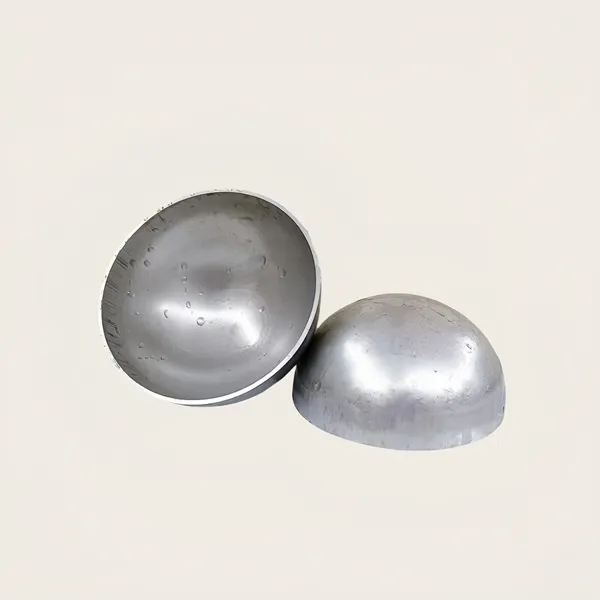
Ms Dish End is also a common choice. Mild steel is relatively inexpensive and easy to work with, but the fabrication process can have a big impact on its performance. Hot forming can improve the overall strength of the MS dish end, but it might also make it more susceptible to rust. Cold forming can help preserve the mild steel's natural corrosion resistance, but it needs to be done carefully to avoid work hardening.
In conclusion, the fabrication process you choose for your dish ends can have a profound effect on their performance. Each process has its own unique advantages and disadvantages, and you need to consider your specific application requirements when making a decision.
If you're in the market for high - quality dish ends, we're here to help. We have extensive experience in both hot forming and cold forming processes, as well as different welding techniques. We can work with you to determine the best fabrication process for your needs, ensuring that you get dish ends that meet your performance and safety requirements.
Whether you're looking for Steel Dish Heads, Pressure Vessel Hemispherical Dished End, or Ms Dish End, we've got you covered. So, if you're interested in discussing your requirements or getting a quote, don't hesitate to reach out. Let's work together to find the perfect dish end solution for your project.
References:
- Smith, J. "Fabrication Processes for Pressure Vessel Components." Journal of Manufacturing Technology, 2018.
- Johnson, A. "The Impact of Welding on Metal Properties." Welding Research Institute, 2019.
- Brown, C. "Cold vs. Hot Forming: A Comparison." Metalworking Magazine, 2020.