

Hey there! If you're in the market for domed tank ends, you've come to the right place. I'm a supplier of these essential components, and I'm here to share some insights into their electrochemistry properties.
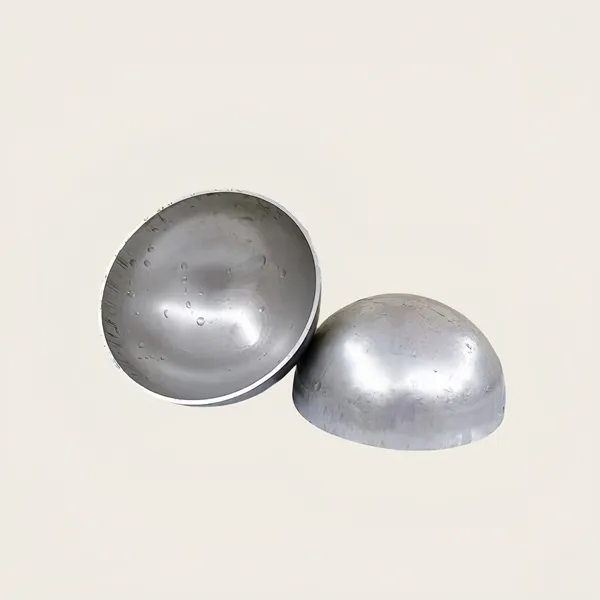
First off, let's talk about what domed tank ends are. They're basically the rounded parts at the ends of tanks, which can be used in a variety of industries, from chemical processing to food and beverage. These tank ends come in different shapes and sizes, like hemispherical, flanged and dished, and hot formed. You can check out more details about Pressure Vessel Hemispherical Dished End, Flanged and Dished Tank Heads, and Hot Formed Tank Heads on our website.
Now, onto the electrochemistry properties. Electrochemistry plays a crucial role in the performance and durability of domed tank ends. When these tank ends are in contact with different substances, like liquids or gases, electrochemical reactions can occur.
One of the key aspects is corrosion. Corrosion is an electrochemical process that can cause damage to the tank ends over time. It happens when the metal in the tank ends reacts with the environment. For example, if the tank is used to store a corrosive liquid, the metal surface can start to break down. The rate of corrosion depends on several factors, such as the type of metal, the pH of the liquid, and the presence of oxygen.
Most domed tank ends are made from metals like stainless steel, carbon steel, or aluminum. Stainless steel is a popular choice because it has good corrosion resistance. It contains chromium, which forms a thin oxide layer on the surface. This oxide layer acts as a protective barrier, preventing further corrosion. But even stainless steel can corrode under certain conditions, like in the presence of chloride ions.
Carbon steel, on the other hand, is more prone to corrosion. It doesn't have the same level of built - in protection as stainless steel. When carbon steel is exposed to moisture and oxygen, it forms iron oxide, which we commonly know as rust. To prevent corrosion in carbon steel tank ends, coatings or linings are often applied. These coatings act as a physical barrier between the metal and the environment.
Aluminum also has its own electrochemical characteristics. It forms a natural oxide layer on its surface, which provides some protection against corrosion. However, this oxide layer can be damaged in acidic or alkaline environments, leading to corrosion.

Another important electrochemical property is the potential difference. Different metals have different electrode potentials. When two different metals are in contact in the presence of an electrolyte (like a liquid that can conduct electricity), a galvanic cell can be formed. This can lead to accelerated corrosion of the metal with the lower electrode potential. For example, if a stainless steel tank end is in contact with a carbon steel component and there's an electrolyte present, the carbon steel will corrode faster due to the galvanic effect.
To prevent galvanic corrosion, proper insulation or the use of compatible metals is necessary. We make sure to take these factors into account when manufacturing our domed tank ends. We use advanced techniques to ensure that the tank ends are made from the right materials and are properly treated to minimize the risk of electrochemical issues.
Electrochemical impedance spectroscopy (EIS) is a technique that can be used to study the electrochemistry of domed tank ends. It measures the electrical impedance of the metal - electrolyte interface. By analyzing the EIS data, we can get information about the corrosion rate, the integrity of the protective coatings, and other electrochemical properties.
We also pay close attention to the surface finish of the tank ends. A smooth surface finish can reduce the likelihood of corrosion. Rough surfaces can trap moisture and contaminants, which can accelerate the electrochemical reactions. So, we use precision manufacturing processes to achieve a high - quality surface finish on our tank ends.
In addition to corrosion prevention, electrochemistry can also be used for other purposes. For example, cathodic protection is a technique that uses electrochemical principles to protect the tank ends from corrosion. In cathodic protection, a sacrificial anode is connected to the tank end. The sacrificial anode has a more negative electrode potential than the tank end, so it corrodes instead of the tank end. This is a very effective way to extend the lifespan of the tank ends, especially in harsh environments.
We understand that the electrochemistry properties of domed tank ends are critical for our customers. Whether you're in the chemical industry, where the tank ends are exposed to highly corrosive substances, or in the food and beverage industry, where hygiene and durability are important, we've got you covered. Our team of experts is constantly researching and developing new ways to improve the electrochemistry performance of our tank ends.
If you're looking for high - quality domed tank ends with excellent electrochemistry properties, we're the supplier for you. We offer a wide range of tank ends to meet your specific needs. Whether you need a small hemispherical tank end for a laboratory setup or a large flanged and dished tank head for an industrial application, we can provide it.
So, if you're interested in learning more about our products or want to start a procurement discussion, don't hesitate to reach out. We're here to help you find the best domed tank ends for your project.
References
- Jones, D. A. (1996). Principles and Prevention of Corrosion. Prentice Hall.
- Uhlig, H. H., & Revie, R. W. (1985). Corrosion and Corrosion Control: An Introduction to Corrosion Science and Engineering. Wiley.