

As a supplier of ASME Standard Tankheads, I've delved deep into the technical aspects of these crucial components. In this blog, I'll explore the vibration characteristics of ASME Standard Tankheads, shedding light on their importance in various industrial applications.
Understanding ASME Standard Tankheads
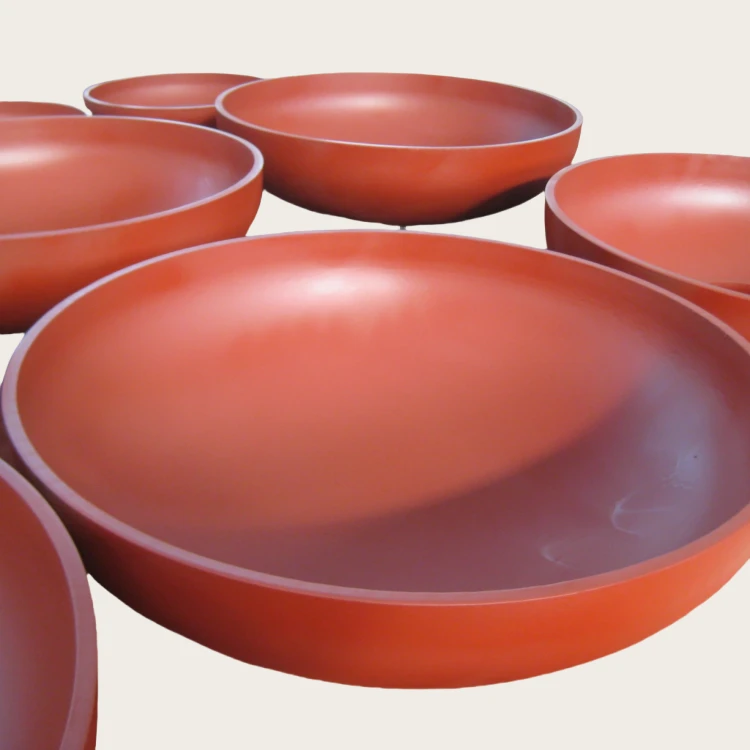
ASME Standard Tankheads are engineered to meet the rigorous standards set by the American Society of Mechanical Engineers (ASME). These tankheads are used in a wide range of industries, including oil and gas, chemical processing, and food and beverage. They come in different shapes and sizes, such as elliptical, spherical, and torispherical, each designed to suit specific operational requirements. The link ASME Standard Tankhead provides more detailed information about these products.
Vibration Basics
Vibration is a mechanical phenomenon where an object oscillates about an equilibrium position. In the context of ASME Standard Tankheads, vibrations can be caused by various factors, including fluid flow, mechanical forces, and external disturbances. Understanding these vibration characteristics is essential for ensuring the structural integrity and safe operation of the tanks.
Factors Affecting Vibration Characteristics
1. Geometry and Shape
The shape of the tankhead plays a significant role in its vibration behavior. For example, 2 1 Ellipsoidal Head has different vibration characteristics compared to a spherical or torispherical head. The curvature and aspect ratio of the ellipsoidal head influence its natural frequencies and mode shapes. A more elongated ellipsoidal head may have lower natural frequencies, making it more susceptible to vibrations at certain frequencies.
2. Material Properties
The material used in the tankhead also affects its vibration characteristics. Different materials have different elastic moduli, densities, and damping properties. For instance, stainless steel tankheads have different vibration responses compared to carbon steel ones. Stainless steel, with its higher elastic modulus, generally has higher natural frequencies and better damping characteristics, which can help reduce vibration amplitudes.
3. Fluid Interaction
When the tank is filled with fluid, the interaction between the fluid and the tankhead becomes a crucial factor. The fluid can add mass and damping to the system, altering the natural frequencies and mode shapes of the tankhead. The fluid's viscosity and density also play a role. High - viscosity fluids can provide more damping, reducing the vibration amplitudes, while low - density fluids may have less of an effect on the vibration characteristics.
4. Mounting and Support Conditions
The way the tankhead is mounted and supported can significantly impact its vibration behavior. A well - supported tankhead with proper mounting fixtures will have different vibration characteristics compared to a poorly supported one. Improper mounting can lead to increased vibration amplitudes and potential structural damage over time.

Vibration Modes and Frequencies
ASME Standard Tankheads can exhibit different vibration modes, such as axial, radial, and circumferential modes. Each mode has a corresponding natural frequency. The natural frequencies are the frequencies at which the tankhead will vibrate freely without any external excitation. These frequencies are determined by the geometry, material properties, and boundary conditions of the tankhead.
For example, in a simple axial vibration mode, the tankhead moves along its axis. The natural frequency of this mode can be calculated using analytical or numerical methods. By knowing these natural frequencies, engineers can design the tank system to avoid resonance, which occurs when the external excitation frequency matches the natural frequency of the tankhead, leading to large vibration amplitudes.
Importance of Understanding Vibration Characteristics
Understanding the vibration characteristics of ASME Standard Tankheads is crucial for several reasons:
1. Structural Integrity
Excessive vibrations can cause fatigue failure in the tankhead. The cyclic stresses induced by vibrations can lead to crack initiation and propagation over time, compromising the structural integrity of the tank. By understanding the vibration characteristics, engineers can design the tankhead to withstand the expected vibration levels and prevent structural failures.
2. Operational Safety
Vibrations can also affect the safety of the tank operation. High - amplitude vibrations can cause loosening of bolts and other fasteners, leading to leaks or even catastrophic failures. Additionally, vibrations can interfere with the normal operation of sensors and control systems installed on the tank, affecting the accuracy of measurements and the reliability of the overall system.
3. Noise and Comfort
In some applications, such as in buildings or residential areas, excessive vibrations can generate noise, which can be a nuisance to the occupants. By controlling the vibration characteristics of the tankhead, the noise levels can be reduced, improving the overall comfort of the environment.
Measuring and Analyzing Vibration Characteristics
To accurately understand the vibration characteristics of ASME Standard Tankheads, various measurement and analysis techniques are used.
1. Vibration Sensors
Accelerometers are commonly used to measure the vibration acceleration of the tankhead. These sensors can be attached to the surface of the tankhead at strategic locations to capture the vibration signals. The data collected by the accelerometers can then be analyzed to determine the vibration frequencies, amplitudes, and mode shapes.
2. Finite Element Analysis (FEA)
FEA is a powerful numerical method used to simulate the vibration behavior of tankheads. By creating a detailed finite element model of the tankhead, engineers can predict its natural frequencies, mode shapes, and vibration responses under different loading conditions. FEA can also be used to optimize the design of the tankhead to improve its vibration characteristics.
Mitigating Vibration Issues
Once the vibration characteristics are understood, several measures can be taken to mitigate vibration issues:
1. Damping Devices
Adding damping devices, such as viscous dampers or tuned mass dampers, can help reduce the vibration amplitudes. These devices work by dissipating the energy of the vibrations, converting it into heat.
2. Design Modifications
Modifying the design of the tankhead, such as changing its shape or thickness, can also improve its vibration characteristics. For example, increasing the thickness of the tankhead can increase its stiffness, raising the natural frequencies and reducing the susceptibility to vibrations.
3. Isolation Systems
Using isolation systems, such as rubber mounts or spring isolators, can isolate the tankhead from the external sources of vibration. These systems can reduce the transmission of vibrations from the surrounding environment to the tankhead.
Conclusion
In conclusion, the vibration characteristics of ASME Standard Tankheads are complex and depend on multiple factors, including geometry, material properties, fluid interaction, and mounting conditions. Understanding these characteristics is essential for ensuring the structural integrity, operational safety, and overall performance of the tanks. As a supplier of ASME Standard Tankheads, we are committed to providing high - quality products that meet the strictest standards. Our team of experts can work with you to understand your specific requirements and design tankheads with optimal vibration characteristics.
If you are interested in purchasing ASME Standard Tankheads or have any questions regarding their vibration characteristics, please feel free to contact us for a detailed discussion. We look forward to the opportunity to work with you and contribute to the success of your projects.
References
- ASME Boiler and Pressure Vessel Code
- Vibration Analysis Handbook for Mechanical Engineers
- Finite Element Analysis in Engineering Design: Applications to Pressure Vessels and Piping