

As a supplier specializing in dish end fabrication, I've witnessed firsthand the profound influence that raw material quality exerts on the entire manufacturing process and the final product. In this blog, I'll delve into the various impacts of raw material quality on dish end fabrication, shedding light on why it's a critical factor that cannot be overlooked.
1. Dimensional Accuracy and Formability
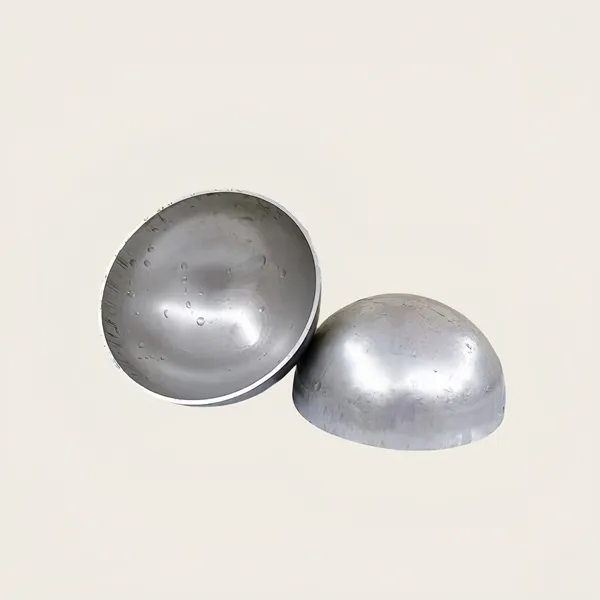
The quality of raw materials plays a pivotal role in determining the dimensional accuracy of dish ends. High - quality raw materials typically have consistent chemical compositions and physical properties across the batch. This consistency ensures that during the forming process, whether it's hot forming or cold forming, the material behaves predictably. For example, when manufacturing Pressure Vessel Hemispherical Dished End, a precise and uniform raw material is crucial. If the material has variations in thickness, strength, or ductility, it can lead to uneven deformation. This may result in dish ends that do not meet the specified dimensions, causing issues during installation and potentially compromising the integrity of the entire pressure vessel.
Formability is another area where raw material quality makes a significant difference. Good - quality materials are more malleable and easier to shape into the desired dish end profile. They can withstand the stress and strain of the forming process without cracking or developing defects. On the other hand, inferior raw materials may have low ductility, which can cause them to fracture during forming, especially in complex shapes like Hot Formed Tank Heads. Fractured areas can reduce the strength of the dish end and make it unsuitable for high - pressure applications.
2. Mechanical Properties and Performance
The mechanical properties of dish ends, such as tensile strength, yield strength, and toughness, are directly related to the quality of the raw materials. High - quality raw materials are carefully refined and processed to achieve the desired mechanical properties. For instance, when we use high - grade steel for dish end fabrication, the resulting dish ends have excellent tensile and yield strength, which is essential for pressure vessels that will be subjected to high internal pressures.
Moreover, toughness is a critical mechanical property that determines the ability of the dish end to resist brittle fracture, especially under cyclic loading conditions. Raw materials with high purity and proper heat treatment can enhance the toughness of the final dish end. If low - quality raw materials are used, the dish ends may have reduced mechanical properties. This can lead to premature failure, leakage, or even catastrophic rupture of the pressure vessel, posing significant safety risks to operators and the environment.
3. Resistance to Corrosion and Wear
Corrosion and wear are common problems in many industrial applications where dish ends are used. The quality of the raw material is a major determinant of the dish end's resistance to these factors. High - quality raw materials often contain alloying elements that enhance corrosion resistance. For example, stainless steel is a popular choice for dish ends in corrosive environments due to the presence of chromium, which forms a passive oxide layer on the surface, protecting it from rust and corrosion.
In addition to corrosion resistance, wear resistance is also crucial, especially in applications where the dish end comes into contact with abrasive materials or experiences high - velocity fluid flow. High - quality materials can be engineered to have a harder surface or better wear - resistant properties. When fabricating Flanged and Dished Tank Heads for use in abrasive environments, using top - notch raw materials can significantly extend the service life of the tank heads and reduce maintenance costs.
4. Weldability and Joining
Welding is an integral part of dish end fabrication, as dish ends are often joined to other components of the pressure vessel. The quality of the raw material has a direct impact on the weldability of the dish end. High - quality materials have consistent chemical compositions and low levels of impurities, which are conducive to good welding. They are less likely to produce defects such as porosity, cracks, or lack of fusion during the welding process.
Proper weldability ensures strong and reliable joints, which are essential for the overall integrity of the pressure vessel. If the raw material has high levels of sulfur or phosphorus, for example, it can cause hot cracking during welding. This can weaken the joint and compromise the safety of the entire structure. Therefore, using high - quality raw materials can improve the welding process and result in high - quality welds that meet industry standards.

5. Cost - effectiveness in the Long Run
Although high - quality raw materials may have a higher upfront cost, they offer significant cost - effectiveness in the long run. Dish ends made from superior raw materials have fewer defects, better performance, and longer service lives. This means fewer replacements, less downtime for maintenance, and lower overall costs for the end - user.
In contrast, using low - quality raw materials may seem like a cost - saving measure initially, but it can lead to frequent repairs, replacements, and potential safety issues. These additional costs can far outweigh the initial savings, making the use of high - quality raw materials a more financially viable option in the long term.
Conclusion
In conclusion, the quality of raw materials has a far - reaching impact on dish end fabrication. It affects dimensional accuracy, mechanical properties, corrosion and wear resistance, weldability, and overall cost - effectiveness. As a dish end fabrication supplier, we understand the importance of using high - quality raw materials to ensure the production of reliable and high - performance dish ends.
If you are in the market for dish ends and are looking for a supplier who prioritizes quality, we are here to assist you. Our team of experts can provide you with detailed information about our products and help you choose the most suitable dish ends for your specific application. We invite you to contact us for a procurement discussion to find the best solutions for your needs.
References
- ASME Boiler and Pressure Vessel Code.
- ASTM International standards related to steel materials for pressure vessels.
- Industry research reports on dish end fabrication and raw material quality.