

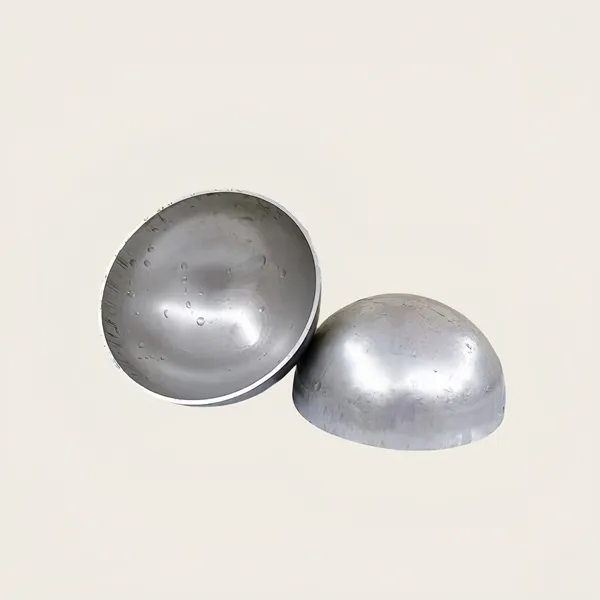
Steel dish heads are crucial components in various industries, especially in pressure vessels, storage tanks, and piping systems. As a supplier of Steel Dish Heads, I am often asked about the manufacturing process of these essential parts. In this blog post, I will take you through the step-by-step process of how steel dish heads are manufactured.
Material Selection
The first step in manufacturing steel dish heads is selecting the appropriate material. The choice of material depends on several factors, including the intended application, operating conditions, and regulatory requirements. Common materials used for steel dish heads include carbon steel, stainless steel, and alloy steel.
Carbon steel is a popular choice due to its affordability and good mechanical properties. It is suitable for applications where corrosion resistance is not a major concern. Stainless steel, on the other hand, offers excellent corrosion resistance and is often used in industries such as food processing, pharmaceuticals, and chemical processing. Alloy steel is used when higher strength and better performance are required, such as in high-pressure applications.
Once the material is selected, it is inspected to ensure it meets the required specifications. This includes checking the chemical composition, mechanical properties, and surface quality of the steel.
Cutting the Blank
After the material is selected and inspected, the next step is to cut the blank. The blank is a flat piece of steel that will be formed into the dish head. The size and shape of the blank are determined by the dimensions of the final dish head.
There are several methods for cutting the blank, including plasma cutting, laser cutting, and water jet cutting. Plasma cutting is a popular method due to its high cutting speed and ability to cut thick materials. Laser cutting is more precise and is often used for cutting thinner materials. Water jet cutting is a versatile method that can cut a wide range of materials and is suitable for applications where heat-affected zones need to be minimized.
Once the blank is cut, it is cleaned to remove any debris or contaminants from the surface.
Forming the Dish Head
The most critical step in manufacturing steel dish heads is forming the blank into the desired shape. There are several methods for forming dish heads, including hot forming, cold forming, and spinning.
Hot Forming
Hot forming is a process in which the blank is heated to a high temperature and then formed into the dish head using a press or a die. This method is suitable for forming thick materials and complex shapes. The high temperature makes the steel more malleable, allowing it to be easily shaped without cracking or tearing.
The blank is heated in a furnace to a temperature between 800°C and 1200°C, depending on the type of steel. Once the blank reaches the desired temperature, it is transferred to a press or a die and formed into the dish head. After forming, the dish head is cooled slowly to relieve any internal stresses.
Cold Forming
Cold forming is a process in which the blank is formed into the dish head at room temperature. This method is suitable for forming thinner materials and simple shapes. Cold forming is more cost-effective than hot forming and does not require a furnace or other heating equipment.
There are several methods for cold forming dish heads, including press forming, hydroforming, and rubber pad forming. Press forming is the most common method and involves using a press to apply pressure to the blank and form it into the dish head. Hydroforming uses hydraulic pressure to form the dish head, while rubber pad forming uses a rubber pad to apply pressure to the blank.
Spinning
Spinning is a process in which the blank is rotated at high speed and a tool is used to gradually shape the blank into the dish head. This method is suitable for forming small to medium-sized dish heads and is often used for producing custom-shaped dish heads.
The blank is mounted on a lathe and rotated at high speed. A tool is then applied to the blank, and the operator gradually moves the tool along the surface of the blank to shape it into the dish head. Spinning is a precise method that can produce high-quality dish heads with a smooth surface finish.
Trimming and Machining
After the dish head is formed, it is trimmed to remove any excess material and to ensure the dimensions of the dish head are within the required tolerances. Trimming is typically done using a cutting machine, such as a plasma cutter or a laser cutter.
Once the dish head is trimmed, it may be machined to improve its surface finish and to create any necessary features, such as holes or flanges. Machining is typically done using a lathe, a milling machine, or a drill press.
Heat Treatment
Heat treatment is an important step in manufacturing steel dish heads, especially for hot-formed dish heads. Heat treatment is used to improve the mechanical properties of the steel and to relieve any internal stresses that may have been introduced during the forming process.
There are several types of heat treatment processes, including annealing, normalizing, quenching, and tempering. Annealing is a process in which the dish head is heated to a high temperature and then cooled slowly to relieve internal stresses and improve the ductility of the steel. Normalizing is similar to annealing, but the dish head is cooled in air instead of slowly in a furnace. Quenching is a process in which the dish head is heated to a high temperature and then cooled rapidly in a quenching medium, such as water or oil, to increase the hardness of the steel. Tempering is a process in which the quenched dish head is heated to a lower temperature and then cooled slowly to reduce the brittleness of the steel and improve its toughness.
The type of heat treatment process used depends on the type of steel and the desired mechanical properties of the dish head.
Welding (if applicable)
In some cases, the dish head may need to be welded to other components, such as a shell or a nozzle. Welding is a critical process that requires careful attention to ensure the integrity of the weld joint.
There are several types of welding processes, including arc welding, gas welding, and resistance welding. Arc welding is the most common method and involves using an electric arc to melt the steel and join the two components together. Gas welding uses a flame to melt the steel, while resistance welding uses an electric current to generate heat and join the two components together.

Before welding, the surfaces of the dish head and the other components are cleaned to remove any contaminants or oxides. The welding process is then carried out using the appropriate welding technique and filler material. After welding, the weld joint is inspected to ensure it meets the required quality standards.
Surface Treatment
After the dish head is formed, trimmed, machined, heat-treated, and welded (if applicable), it is ready for surface treatment. Surface treatment is used to improve the corrosion resistance and appearance of the dish head.
There are several methods for surface treatment, including painting, galvanizing, and passivation. Painting is a common method for protecting the dish head from corrosion and is often used in applications where the dish head is exposed to the environment. Galvanizing is a process in which the dish head is coated with a layer of zinc to protect it from corrosion. Passivation is a process in which the dish head is treated with a chemical solution to remove any free iron from the surface and improve its corrosion resistance.
Inspection and Testing
Before the dish head is shipped to the customer, it is inspected and tested to ensure it meets the required specifications. This includes checking the dimensions, surface quality, and mechanical properties of the dish head.
There are several methods for inspecting and testing dish heads, including visual inspection, dimensional inspection, non-destructive testing (NDT), and destructive testing. Visual inspection is the most basic method and involves checking the surface of the dish head for any defects, such as cracks, porosity, or surface roughness. Dimensional inspection is used to ensure the dish head meets the required dimensions and tolerances. NDT methods, such as ultrasonic testing, magnetic particle testing, and radiographic testing, are used to detect internal defects in the dish head. Destructive testing, such as tensile testing and hardness testing, is used to determine the mechanical properties of the dish head.
If any defects are found during the inspection and testing process, the dish head is either repaired or rejected.
Conclusion
Manufacturing steel dish heads is a complex process that requires careful attention to detail and strict quality control. From material selection to final inspection, each step in the process plays a crucial role in ensuring the quality and performance of the dish head.
As a supplier of Steel Dish Heads, we are committed to providing our customers with high-quality dish heads that meet their specific requirements. Whether you need a standard dish head or a custom-designed one, we have the expertise and experience to deliver a product that meets your needs.
If you are in the market for Ms Dish End or Pressure Vessel Hemispherical Dished End, please feel free to contact us for more information. We look forward to discussing your requirements and providing you with a competitive quote.
References
- ASME Boiler and Pressure Vessel Code
- API Standards
- ASTM Standards