

As a trusted supplier of Steel Dish Heads, I am often asked about the welding process for these crucial components. Steel dish heads are widely used in various industries, including petrochemical, food processing, and power generation, where they serve as essential parts of pressure vessels, storage tanks, and other equipment. Understanding the welding process is vital for ensuring the quality, reliability, and safety of these products. In this blog post, I will delve into the welding process for steel dish heads, covering everything from preparation to post - welding treatment.
1. Preparation Before Welding
Before starting the welding process, thorough preparation is essential. This includes material selection, cleaning, and joint design.
Material Selection
The choice of steel for dish heads depends on the specific application requirements, such as pressure, temperature, and corrosion resistance. Common steel materials include carbon steel, stainless steel, and alloy steel. For example, in a petrochemical application where corrosion resistance is crucial, stainless steel like 304 or 316 may be selected. As a supplier, we ensure that the steel we provide meets the relevant industry standards and customer specifications.
Cleaning
Cleaning the steel surfaces to be welded is a critical step. Any dirt, rust, oil, or other contaminants can affect the quality of the weld. We typically use mechanical methods such as grinding or sandblasting to remove surface impurities. Chemical cleaning agents may also be used in some cases to ensure a clean and oxide - free surface.
Joint Design
The joint design for steel dish heads is carefully planned to ensure proper fusion and strength. Common joint designs include butt joints, fillet joints, and groove joints. The choice of joint design depends on factors such as the thickness of the steel, the welding method, and the required strength of the joint. For thicker steel plates, groove joints are often preferred as they allow for better penetration of the weld metal.
2. Welding Methods
There are several welding methods available for steel dish heads, each with its own advantages and limitations.
Shielded Metal Arc Welding (SMAW)
SMAW, also known as stick welding, is a widely used welding method. It is relatively simple and can be used in various environments. In SMAW, an electrode coated with flux is used to create an arc between the electrode and the workpiece. The flux protects the weld pool from atmospheric contamination. SMAW is suitable for welding carbon steel and some low - alloy steels. However, it has a relatively low welding speed and may require more skill to achieve high - quality welds.
Gas Metal Arc Welding (GMAW)
GMAW, or MIG (Metal Inert Gas) welding, uses a continuous solid wire electrode and a shielding gas to protect the weld pool. This method offers high welding speeds and good weld quality. It is commonly used for welding stainless steel and aluminum. The shielding gas can be a mixture of argon and carbon dioxide, which provides excellent protection and helps to control the weld bead shape.
Gas Tungsten Arc Welding (GTAW)
GTAW, also known as TIG (Tungsten Inert Gas) welding, is a precise welding method. It uses a non - consumable tungsten electrode and a shielding gas. GTAW is suitable for welding thin - walled steel dish heads and materials that require high - quality welds, such as stainless steel and titanium. It offers excellent control over the weld pool and produces clean, high - quality welds. However, it has a relatively low welding speed and is more expensive compared to other methods.
Submerged Arc Welding (SAW)
SAW is a high - productivity welding method. In SAW, the arc is submerged under a layer of granular flux. This method provides deep penetration and high - quality welds. It is commonly used for welding thick - walled steel dish heads in large - scale production. SAW is suitable for carbon steel and some low - alloy steels.
3. Welding Parameters
The welding parameters, such as welding current, voltage, welding speed, and electrode or wire diameter, need to be carefully controlled to ensure a high - quality weld.
Welding Current
The welding current affects the penetration and deposition rate of the weld metal. Higher currents generally result in deeper penetration but may also cause excessive spatter and distortion. The appropriate welding current depends on the thickness of the steel, the welding method, and the electrode or wire diameter.
Voltage
The voltage in welding determines the arc length and the shape of the weld bead. A stable voltage is crucial for achieving a consistent weld quality. The voltage is usually adjusted based on the welding current and the type of welding method.
Welding Speed
The welding speed affects the heat input and the shape of the weld bead. Too high a welding speed may result in incomplete fusion, while too low a speed can cause excessive heat input and distortion. The optimal welding speed is determined through testing and experience.
Electrode or Wire Diameter
The electrode or wire diameter is selected based on the thickness of the steel and the welding current. Larger diameters are used for thicker steel plates and higher welding currents.
4. Quality Control During Welding
Quality control is an integral part of the welding process for steel dish heads.
Visual Inspection
Visual inspection is the most basic form of quality control. It involves checking the weld bead for any visible defects such as cracks, porosity, and incomplete fusion. Any defects found during visual inspection need to be corrected immediately.
Non - Destructive Testing (NDT)
NDT methods are used to detect internal defects in the weld. Common NDT methods include ultrasonic testing (UT), radiographic testing (RT), magnetic particle testing (MT), and liquid penetrant testing (PT). UT and RT are used to detect internal defects such as lack of fusion and cracks, while MT and PT are used to detect surface - breaking defects.
5. Post - Welding Treatment
After welding, post - welding treatment is often required to improve the properties of the weld and the overall dish head.
Heat Treatment
Heat treatment can relieve residual stresses, improve the toughness and hardness of the weld, and reduce the risk of cracking. Common heat treatment methods include annealing, normalizing, and tempering. The type of heat treatment depends on the steel material and the application requirements.
Surface Treatment
Surface treatment is used to protect the weld and the dish head from corrosion. This may include painting, galvanizing, or applying a corrosion - resistant coating.
6. Applications of Steel Dish Heads
Steel dish heads have a wide range of applications in different industries.
Pressure Vessels
In pressure vessels, steel dish heads are used to close the ends of the vessel. They need to withstand high internal pressures and ensure the safety of the vessel. Different types of dish heads, such as Torispherical Dished Head, are used depending on the design requirements of the pressure vessel.
Storage Tanks
Storage tanks for liquids and gases often use steel dish heads. Flanged and Dished Tank Heads are commonly used in storage tank applications. These heads provide a reliable seal and help to prevent leakage.

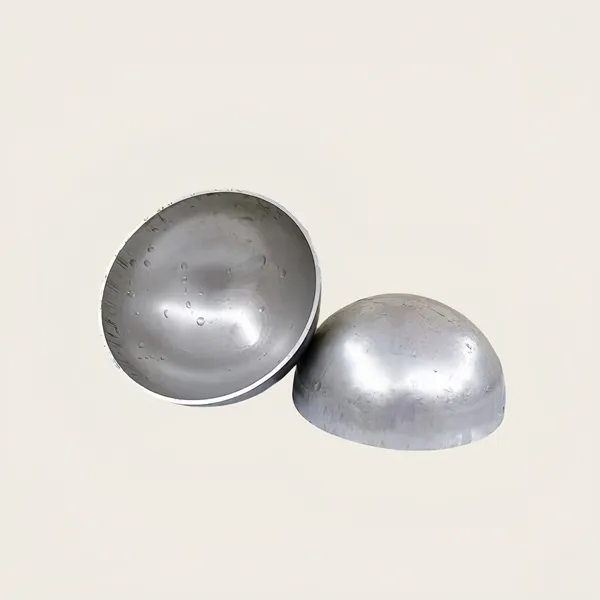
Power Generation
In power generation plants, steel dish heads are used in boilers and other equipment. Pressure Vessel Hemispherical Dished End are often used in high - pressure applications where high strength and reliability are required.
Conclusion
The welding process for steel dish heads is a complex and critical process that requires careful planning, proper selection of materials and welding methods, and strict quality control. As a supplier of Steel Dish Heads, we are committed to providing high - quality products that meet the diverse needs of our customers. If you are in need of steel dish heads or have any questions about the welding process, we encourage you to contact us for a detailed discussion and procurement negotiation. We look forward to working with you to provide the best solutions for your projects.
References
- ASME Boiler and Pressure Vessel Code
- AWS Welding Handbook
- ISO Standards for Welding and Steel Products